
New EPWP intake launches careers in conservation and eco-tourism in the Western Cape
CapeNature has welcomed 475 new participants into a three-year Expanded Public Works Programme (EPWP) cycle, emphasising its commitment to skills development, conservation, and community upliftment across the province.
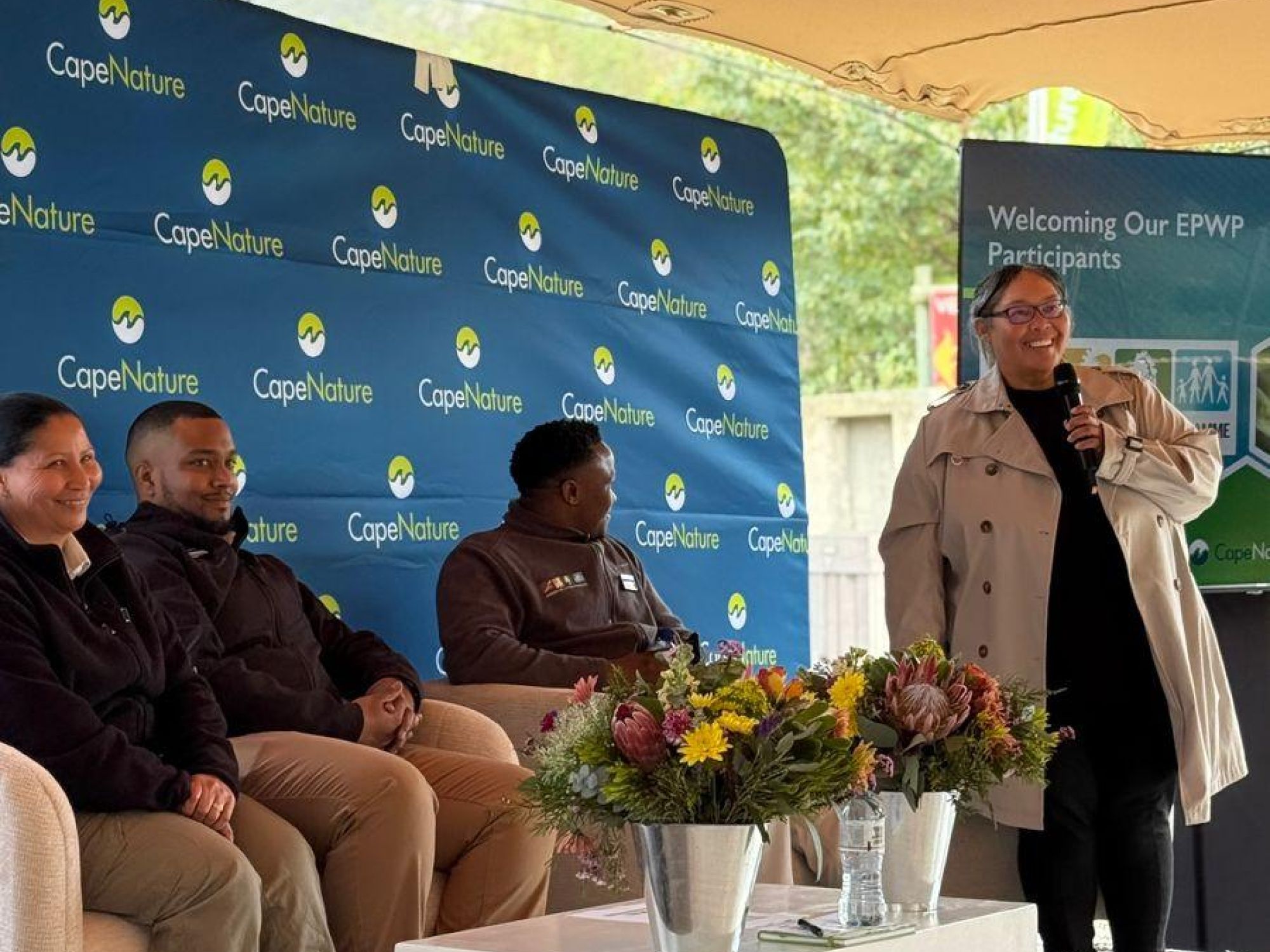
A small cohort of these participants, based at Kogelberg and Stony Point Nature Reserves, were officially welcomed at an event hosted at Kogelberg and led by Western Cape Provincial Minister of Local Government, Environmental Affairs and Development Planning, Anton Bredell.
The event coincided with Mandela Day, celebrated annually on 18 July. This year’s Mandela Day theme, “It’s still in our hands to combat poverty and inequity”, is reflected in CapeNature’s EPWP intake with a call to action to create meaningful employment opportunities that address both environmental and socio-economic challenges across the province.
CapeNature provides EPWP participants with training, mentorship, and hands-on experience in key areas, including invasive species management, wildfire response, biodiversity monitoring, and eco-tourism, across its provincial nature reserves. The programme actively supports the inclusion of women, youth, and persons with disabilities, aligning with national targets for vulnerable groups. Between 2022 and 2025, 1 366 participants were employed through the programme.
Instead of a one-year contract, we offer a three-year contract. During this time, there will be opportunities for training, and you will have the opportunity to explore your particular interests in conservation, tourism or working with our many neighbours and stakeholder communities. People who participated in the CapeNature EPWP have made huge strides in their personal development. Some managed to complete their schooling, and some workers secured permanent employment as a result of their commitment during their contracts.
Thabiso Mokoena joined the EPWP after completing his undergraduate diploma and began as an Environmental Education Officer. Thabiso has since progressed through several permanent roles at CapeNature, including Field Ranger, and is now the SMME Development Specialist.
That role equipped me with the skills to engage stakeholders, a strength that’s been instrumental throughout my career. The skills, experience, and mentorship I received through EPWP shaped my path and supported my growth.
Sakumzi Woyikani is currently in his second EPWP cycle and works as a front-of-house assistant at Kogelberg.
I was fresh out of school and looking for work to gain experience. EPWP not only creates opportunities for young people but also helps alleviate poverty by allowing us to earn an income and support our families.
He added that the programme has helped him build a reliable network and develop valuable skills in areas such as financial management and customer service.
Lwando Baleni began his journey in the programme as a conservation student at Walker Bay Nature Reserve in fulfilment of his Nature Conservation Diploma. Thereafter, he worked as a Pupil Landscape Support Officer at De Hoop Nature Reserve and ultimately secured employment with CapeNature partner, Dyer Island Conservation Trust, as a Marine Seabird Ranger.
The programme gave me a holistic view of conservation. Exposure to a range of different fields ensured that I have a set of skills that are unique to me. I began as a student and have developed into a passionate conservationist focused on the critically endangered African Penguin.
Jonathan Jasson started as an Admin Assistant before ultimately securing employment as a Tourism Liaison Officer.
The EPWP gave me the skills, confidence and exposure I needed to grow professionally and support my family. From my start as an Admin Assistant in 2020 to my current role as a Tourism Liaison Officer at Goukamma Nature Reserve, the journey has been one of growth, resilience and purpose. I’m grateful to CapeNature and the EPWP for opening the door to meaningful opportunities in conservation and community upliftment.
The EPWP remains a key initiative within CapeNature’s mandate to promote environmental sustainability while uplifting communities. By investing in people and nature, the Entity is creating a skilled workforce that will continue to empower the people and develop the economy of the Western Cape.
Related News

CapeNature visitors invited to support communities through new donation scheme
A visit to a CapeNature nature reserve can help a neighbour in need. From 5 October 2026, guests at three participating nature reserves can bring gently used clothing, blankets and other essential items for local non-profit organisations. The first phase of the donation scheme will run at Grootvadersbosch Nature Reserve near Heidelberg, Kogelberg Nature Reserve near Kleinmond, and Cederberg Wilderness Nature Reserve near Clanwilliam.

Radio network upgrade to strengthen emergency communication in Hangklip area
CapeNature and Overstrand Municipality will install a small radio repeater station near Hangklip Peak as part of an upgrade to the region’s radio communication network. The repeater will strengthen the communication networks used by both parties and improve coverage across the Overstrand municipal area, Kogelberg Nature Reserve, Betty’s Bay Marine Protected Area and parts of the City of Cape Town. Reliable radio communication is essential for the daily operations of

State of Conservation Report 2026 tracks progress and pressures facing Western Cape biodiversity
The Western Cape’s biodiversity is facing mounting pressure, with a sharp increase in the area affected by fires and more ecosystems and species classified as threatened, according to the Western Cape State of Conservation Report 2026. The report records 107 fires that burned 215 936 hectares during the 2025/26 reporting period – almost three times the 75 174 hectares burned by 97 fires in the previous reporting period.

El Niño raises fire risk as Western Cape prepares for a challenging fire season
The Western Cape is preparing for a potentially challenging wildfire season, with the developing El Niño weather pattern expected to contribute to hotter and drier conditions and an increased risk of wildfires across the province. The South African Weather Service has warned of below-normal rainfall associated with the expected strong El Niño during the coming summer season. While El Niño does not automatically mean that every part of the province will experience drought

Cape fur seal safety remains important this World Rabies Day
On World Rabies Day (28 September), CapeNature is reminding residents and visitors to keep a safe distance from Cape fur seals and to act immediately if they or their pets are bitten, scratched or exposed to a seal’s saliva. Rabies has been detected in Cape fur seals along the South African coastline and by the end of 2025, at least 176 people had been bitten by seals. While most seals do not pose a threat to people, they are wild animals and should never be approached, touched, fed or encouraged to interact with humans.

How Waste Affects Biodiversity and What We Can Do About It
Waste is more than an eyesore. Littered streets, polluted rivers and overflowing landfills are visible signs of a much wider environmental problem. Every year, people generate large volumes of waste, yet much of it is not managed effectively. In South Africa, more than 60% of waste has been reported as ending up in landfills. With service-delivery challenges and many major landfill sites approaching capacity, the pressure on communities and natural ecosystems continues to grow. Both terrestrial and aquatic biodiversity carry much of the impact.