
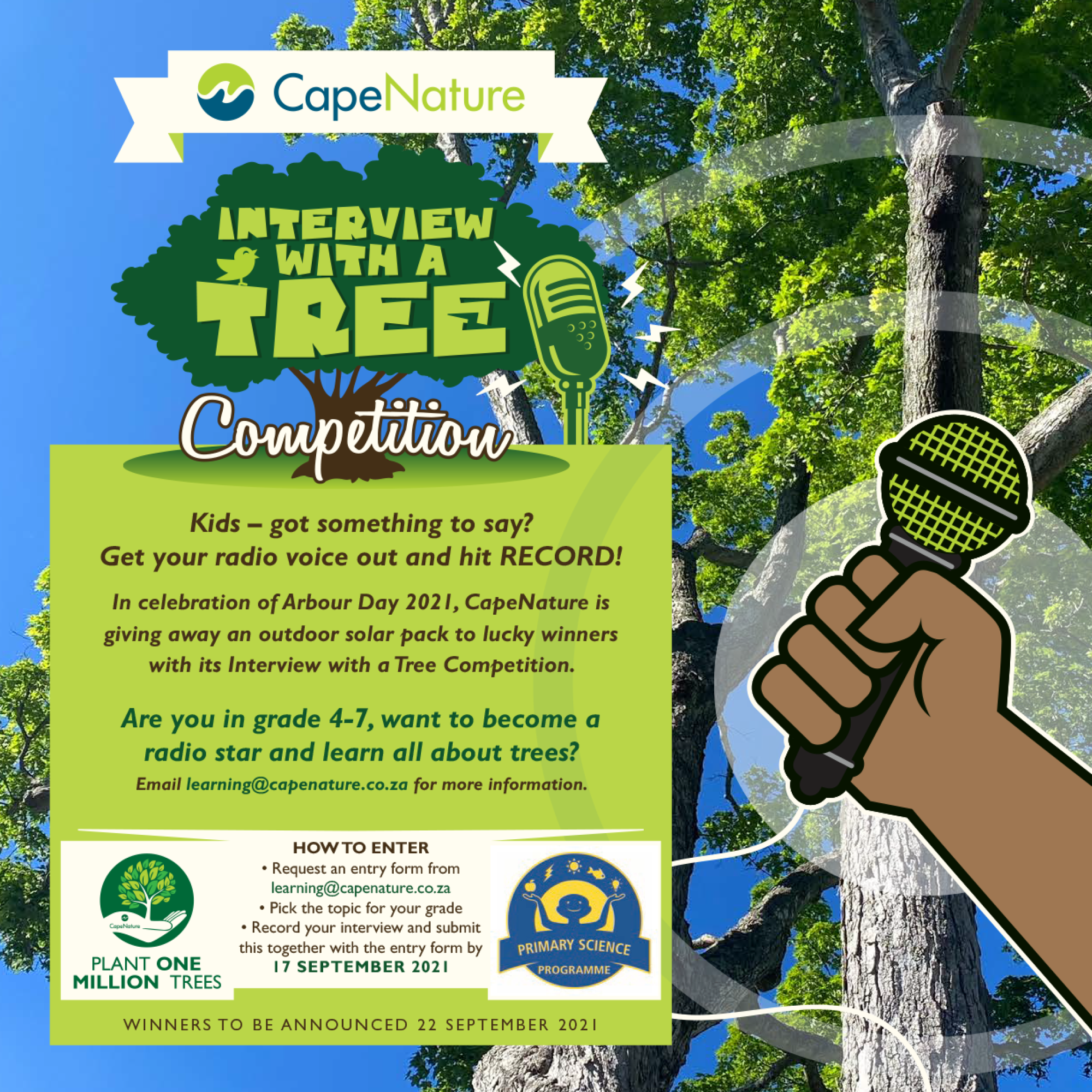
Interview a tree and win big!
In celebration of Arbour Day, 2021 observed on 1 September every year, CapeNature is giving away an outdoor solar pack (made up of a mini portable solar system consisting of a solar panel, radio / mp3, Bluetooth functionality, two light bulbs and a USB charger) to lucky winners with its popular “Interview with a Tree” competition. Entering the competition is really easy.
Children play the part of the interviewee and get a friend, sibling, parent, or teacher to play the part of the tree. This competition gives learners in their respective grades the opportunity to learn more about trees and the important role they play in society. It is also an opportunity for children to get their creative juices flowing by conceptualising, scripting, and recording their audio productions. The overall winner stands a chance of being interviewed live on the radio.
Entering the competition is really easy. Simply request an entry form by emailing learning@capenature.co.za and submit it with your recording by no later than midnight, 17 September 2021.
Not sure how to start? Listen to some of last year’s winning entries.
Top tip: Make sure the tree you are interviewing is indigenous to South Africa!
Related News

State of Conservation Report 2026 tracks progress and pressures facing Western Cape biodiversity
The Western Cape’s biodiversity is facing mounting pressure, with a sharp increase in the area affected by fires and more ecosystems and species classified as threatened, according to the Western Cape State of Conservation Report 2026. The report records 107 fires that burned 215 936 hectares during the 2025/26 reporting period – almost three times the 75 174 hectares burned by 97 fires in the previous reporting period.

Newly discovered species named after CapeNature Ecologist, Dr Martine Jordaan
A newly described Paradiplozoon species has been named after CapeNature Fauna Ecologist, Dr Martine Jordaan, in recognition of her knowledge and passion for the aquatic life of the Cape Fold Ecoregion, continuous enthusiasm to study the region's fishes and understanding their parasitofauna. The newly identified species – Paradiplozoon jordaanae – is named after Dr Jordaan.

Huis River aquatic invertebrate survey strengthens partnerships for freshwater ecosystem conservation
In the upper reaches of the Huis River near Barrydale, a recent aquatic macroinvertebrate survey is helping to inform conservation decisions for the Critically Endangered Tradouw redfin (Pseudobarbus burchelli), including the potential expansion of its range into upstream habitats in the river. The survey was conducted in partnership with
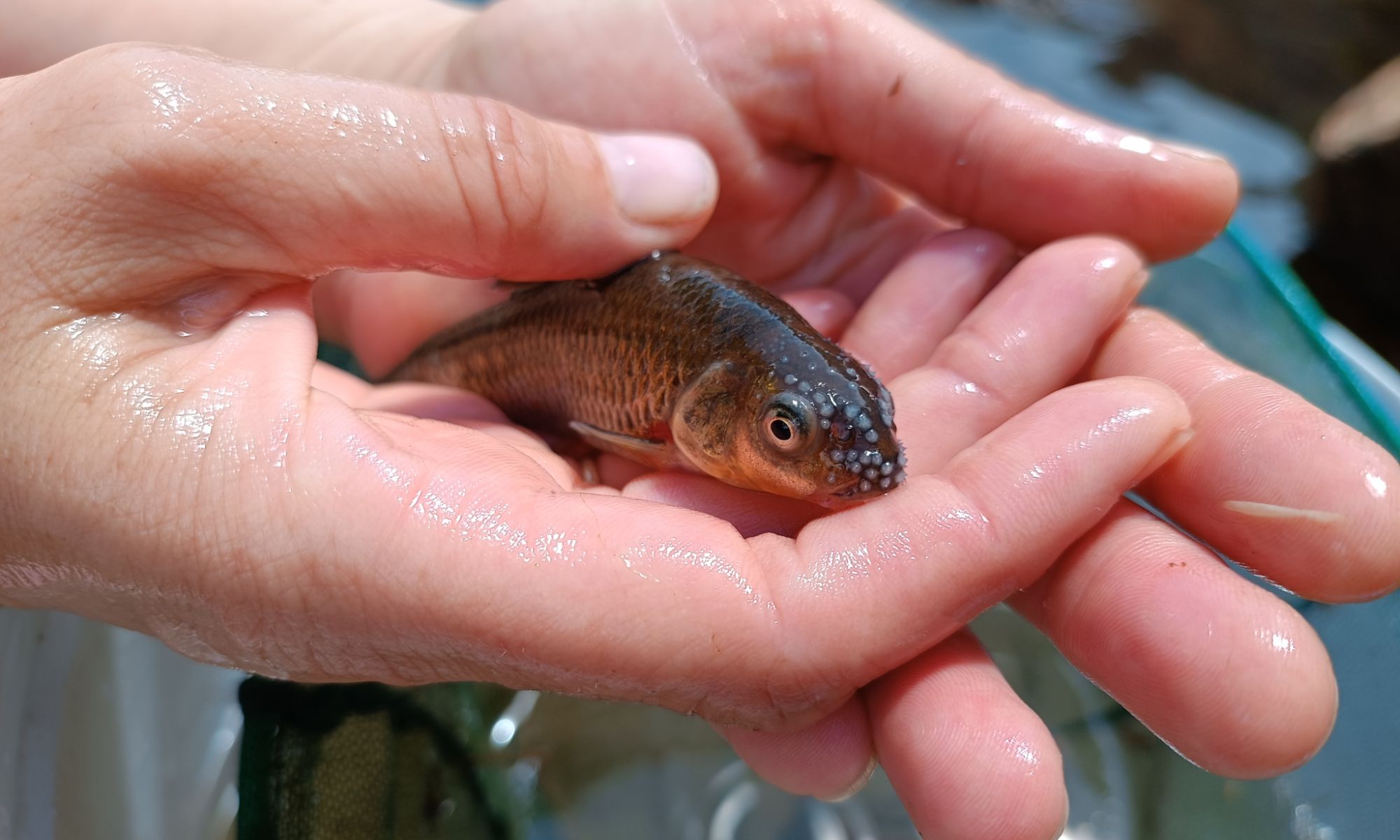
Ongoing efforts to safeguard the Critically Endangered Tradouw redfin through monitoring
The Critically Endangered Tradouw redfin (Pseudobarbus burchelli) is one of South Africa’s most range-restricted freshwater fishes. It is endemic to the Huis–Tradouw River catchment near Barrydale in the Western Cape. The species is listed as Critically Endangered due to its small and fragmented distribution, threats from invasive fish species, pollution, water abstraction, and habitat degradation.

The Big Biodiversity Challenge Returns to Inspire Young Eco-Champions
The Western Cape Environmental Education Friends (WCEEF), together with members CapeNature, Western Cape Government, SANBI, Department of Forestry, Fisheries and the Environment (DFFE), Nature Connect, SANParks, Working on Fire, the City of Cape Town and the Two Oceans Aquarium Foundation, announces the return of its flagship biodiversity competition for learners in grades 6 – 9.

Rare Erica species rediscovered after nearly four decades
After an unsuccessful search in 2012, the rare Erica cunoniensis was feared extinct, but in September 2025, a team of conservationists made a rediscovery of this Endangered plant species, found for the first time in nearly four decades.