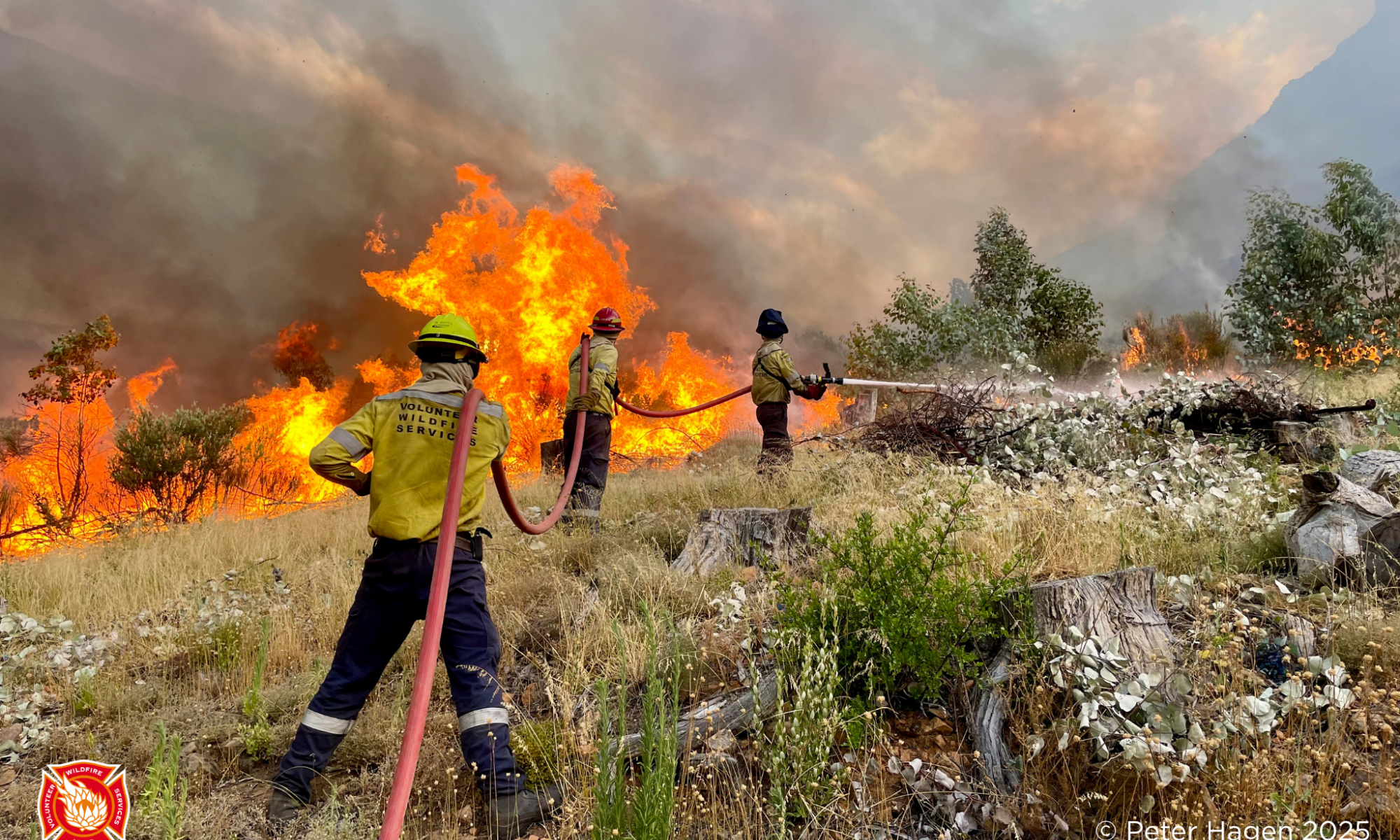
Cederberg fire recovery and visitor access
After a significant wildfire spread throughout the Cederberg Wilderness Area during the festive period, recovery and reopening efforts are now underway as CapeNature looks forward to welcoming visitors again.
The Cederberg is a globally significant and ecologically sensitive landscape. After a fire, exposed soils, fragile regenerating vegetation and displaced wildlife are especially vulnerable to disturbance.
CapeNature has begun a comprehensive recovery programme, which will continue over the next six to twelve months, including:
- Assessing and repairing hiking trails, jeep tracks and mountain huts
- Replacing signage and improving visitor safety
- Managing erosion and removing invasive plant species
- Monitoring ecological recovery, including the restoration of the critically endangered Clanwilliam Cedar, in partnership with conservation organisations and volunteers.
The fire, which ignited on 22 December 2025 along Uitkyk Pass, burnt approximately 53 000 hectares of land, including areas managed by CapeNature as well as adjoining private properties. The fire was successfully contained on 5 January 2026.
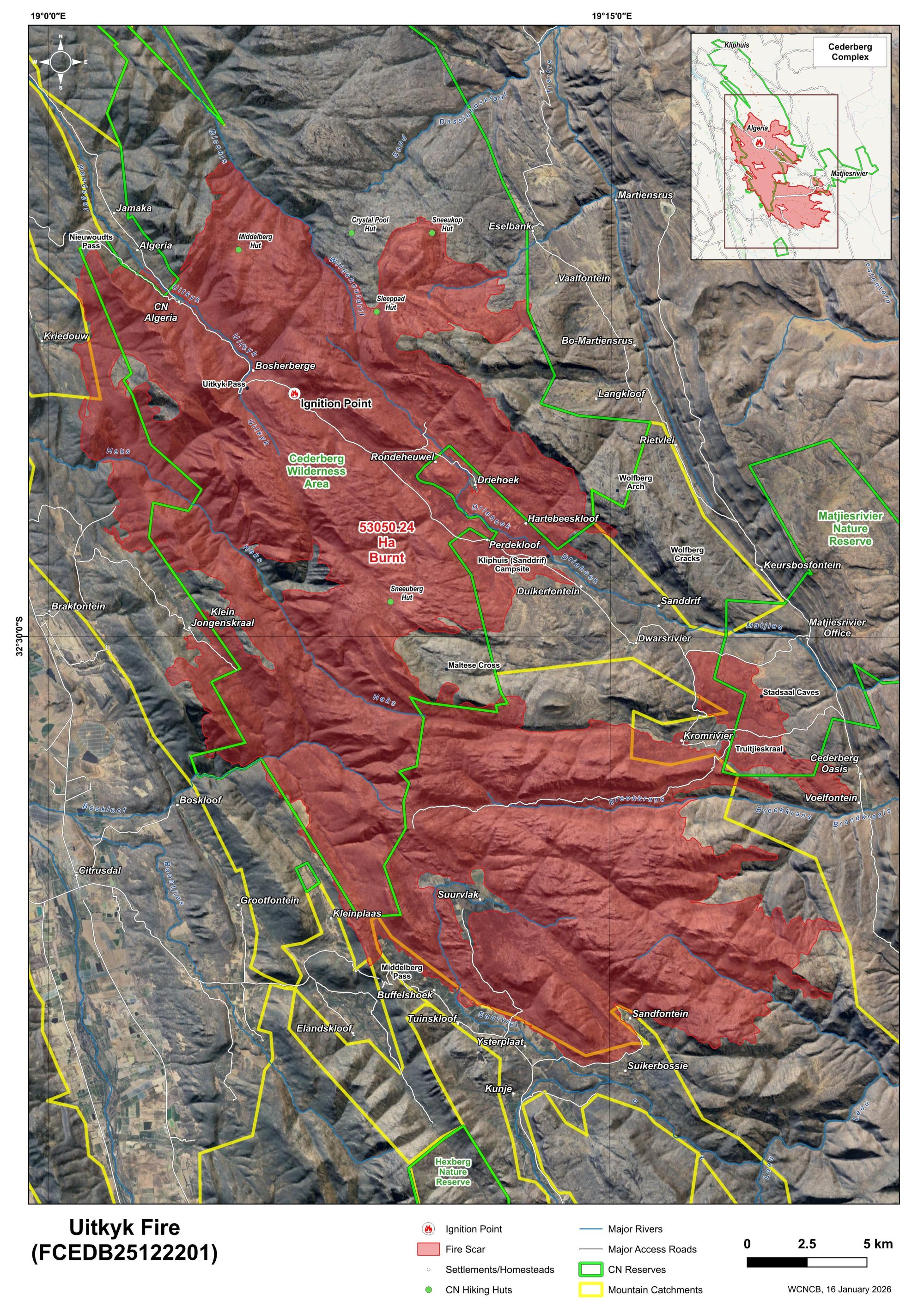
While the fire is no longer active, its impact on the landscape has been extensive. As a result, several hiking trails, wild camping areas and sites within the affected zones will remain closed for an extended period to allow for safety assessments, rehabilitation work and natural ecosystem recovery.
The Stadsaal and Truitjieskraal rock art sites and cave were not damaged by the fire and remain structurally intact. Although surrounding vegetation was affected, these culturally significant sites are currently open under monitored and limited access conditions.
Areas currently open to visitors:
- Northern Cederberg (between Pakhuis Pass/ Kliphuis, Heuningvlei, Langkloof, and Krakadouw).
- Wolfberg Arch (via the Cracks) and Maltese Cross are open for day hikes only. Overnight stays are not permitted. Access is via Sandrift, and permits must be obtained from Sandrift reception. All other access routes remain closed.
- Stadsaal and Truitjieskraal: Open via the jeep track. Advance bookings are required online or at the Matjiesrivier office (daily, 07:30–16:00).
- Algeria and Bosherberge self-catering cottages are scheduled to reopen on 27 January 2026, subject to final safety assessments.
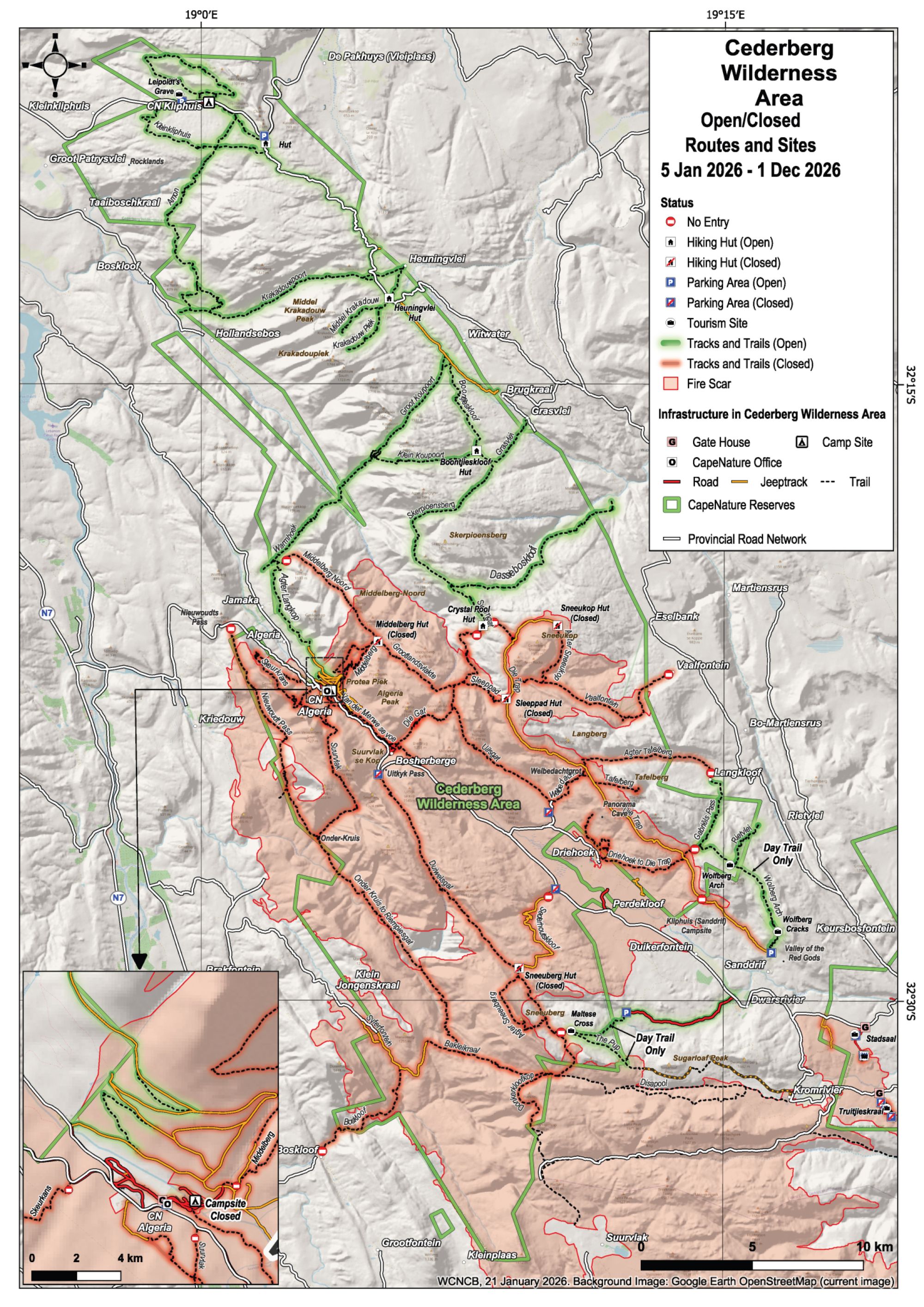
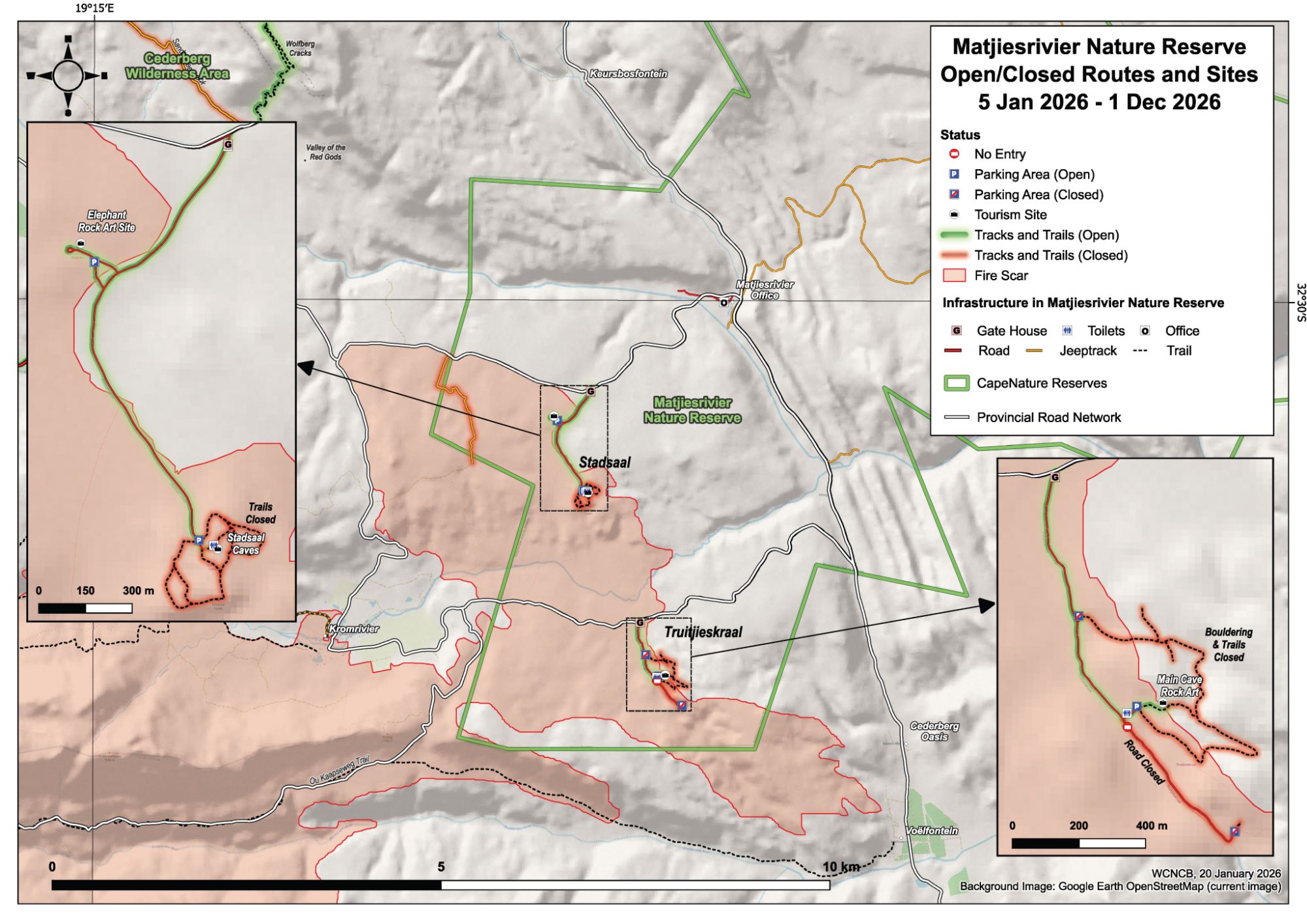
The scale of this fire has had a significant impact on both the landscape and visitor infrastructure within the Cederberg. Our priority is to protect lives, safeguard ecological recovery and ensure that when areas do reopen, they are safe and resilient for both people and nature. Respecting access restrictions during this period is important for the full ecological recovery of the Cederberg Wilderness Area. Premature access to burnt areas can undermine recovery efforts and place visitors at risk. Such restrictions also assist our staff in prioritises and allocating their time to the many competing tasks, which must all be planned for and undertaken.
CapeNature urges all visitors to respect closure notices, use only approved access points and ensure that permits are obtained before entering the area. Visitors affected by cancellations can explore alternative accommodation options via the CapeNature Contact Centre on 087 087 8250 or email reservation.alert@capenature.co.za.
Related News

Penguin Palooza 2026 returns to Stony Point in support of African Penguin conservation
Stony Point in Betty’s Bay is one of the last known locations on Earth where African Penguins still breed on the mainland, and the species is under growing pressure. On Saturday, 7 November 2026, Penguin Palooza returns to Stony Point Nature Reserve, giving the public a chance to learn about the species and the work CapeNature, SANCCOB and other partners are doing to protect it.

Robberg Nature Reserve named Best Outdoor Activity in 2026 Readers’ Choice Awards
Robberg Nature Reserve named Best Outdoor Activity in 2026 Readers’ Choice Awards. Robberg Nature Reserve has been named the Best Outdoor Activity in the Best of Knysna & Plett Readers’ Choice Awards 2026. The recognition follows months of nominations and voting by communities across Knysna, Plettenberg Bay and Sedgefield, making the award a meaningful reflection of the place Robberg holds in the local community.

CapeNature maintains clean audit record and expands the Western Cape’s Protected Areas
CapeNature's 2025/26 Annual Report shows the Entity added more than 44 000 hectares to the Western Cape conservation estate over the year. The additions extend protection across mountain catchments that feed the province's water supply, guarding them against the invasive plant growth and wildfire risk that threaten water security. Ultimately the protected areas expansion improves our ability to conserve the rich and unique Western Cape biodiversity.

WESSA recognises 62 Blue Flags and 19 Green Coast sites as South Africa marks 25 years of coastal stewardship
South Africa’s Blue Flag and Green Coast programmes are entering their next chapter with a renewed focus on environmental stewardship, inclusion, community participation and long-term coastal resilience, as WESSA, the Wildlife and Environment Society of South Africa, celebrates 25 years of Blue Flag in South Africa and its own centenary.

CapeNature visitors invited to support communities through new donation scheme
A visit to a CapeNature nature reserve can help a neighbour in need. From 5 October 2026, guests at three participating nature reserves can bring gently used clothing, blankets and other essential items for local non-profit organisations. The first phase of the donation scheme will run at Grootvadersbosch Nature Reserve near Heidelberg, Kogelberg Nature Reserve near Kleinmond, and Cederberg Wilderness Nature Reserve near Clanwilliam.

Radio network upgrade to strengthen emergency communication in Hangklip area
CapeNature and Overstrand Municipality will install a small radio repeater station near Hangklip Peak as part of an upgrade to the region’s radio communication network. The repeater will strengthen the communication networks used by both parties and improve coverage across the Overstrand municipal area, Kogelberg Nature Reserve, Betty’s Bay Marine Protected Area and parts of the City of Cape Town. Reliable radio communication is essential for the daily operations of