
Freshwater science takes centre stage at the 2026 SASAqS Conference
The Southern African Society of Aquatic Scientists (SASAqS) is a learned society concerned with the research, management and conservation of inland waters and their associated biota throughout southern Africa. Established in 1964 as the Limnological Society of South Africa, SASAqS provides an important forum for discussion and sharing of scientific ideas. The two cornerstones of the society's activities are the annual conference and the African Journal of Aquatic Science. The society has also contributed to a variety of projects ranging from National Legislation to the publication of books.
The 2026 conference was held in the picturesque town of Port Alfred and ensured an opportunity for colleagues to connect and for young scientists and students to start building on future collaborations. Conference highlights included a keynote presentation by Prof Paul Skelton who is considered one of the leading authorities of freshwater fish taxonomy globally. Paul is author of the comprehensive field guide Freshwater Fishes of Southern Africa.
Another highlight included a session on the various taxon-specific outputs under the REFRESH project – a Foundational Biodiversity Information Programme (FBIP) funded project that aimed to (1) collect foundational biodiversity data for seven groups of freshwater taxa through field surveys to information gaps in under-sampled ecoregions, (2) georeference and digitise existing uncatalogued distribution records and (3) help build capacity to expedite biodiversity inventories and assessment of species extinction risk. The project was led by researchers from the South African Institute for Aquatic Biodiversity (SAIAB) and South African National Biodiversity Institute (SANBI). CapeNature ecologist Dr Martine Jordaan played an active role in the Western Cape component of the REFRESH project and presented her work on evaluating the role of Protected Areas in the Western Cape for the protection of indigenous freshwater fish.
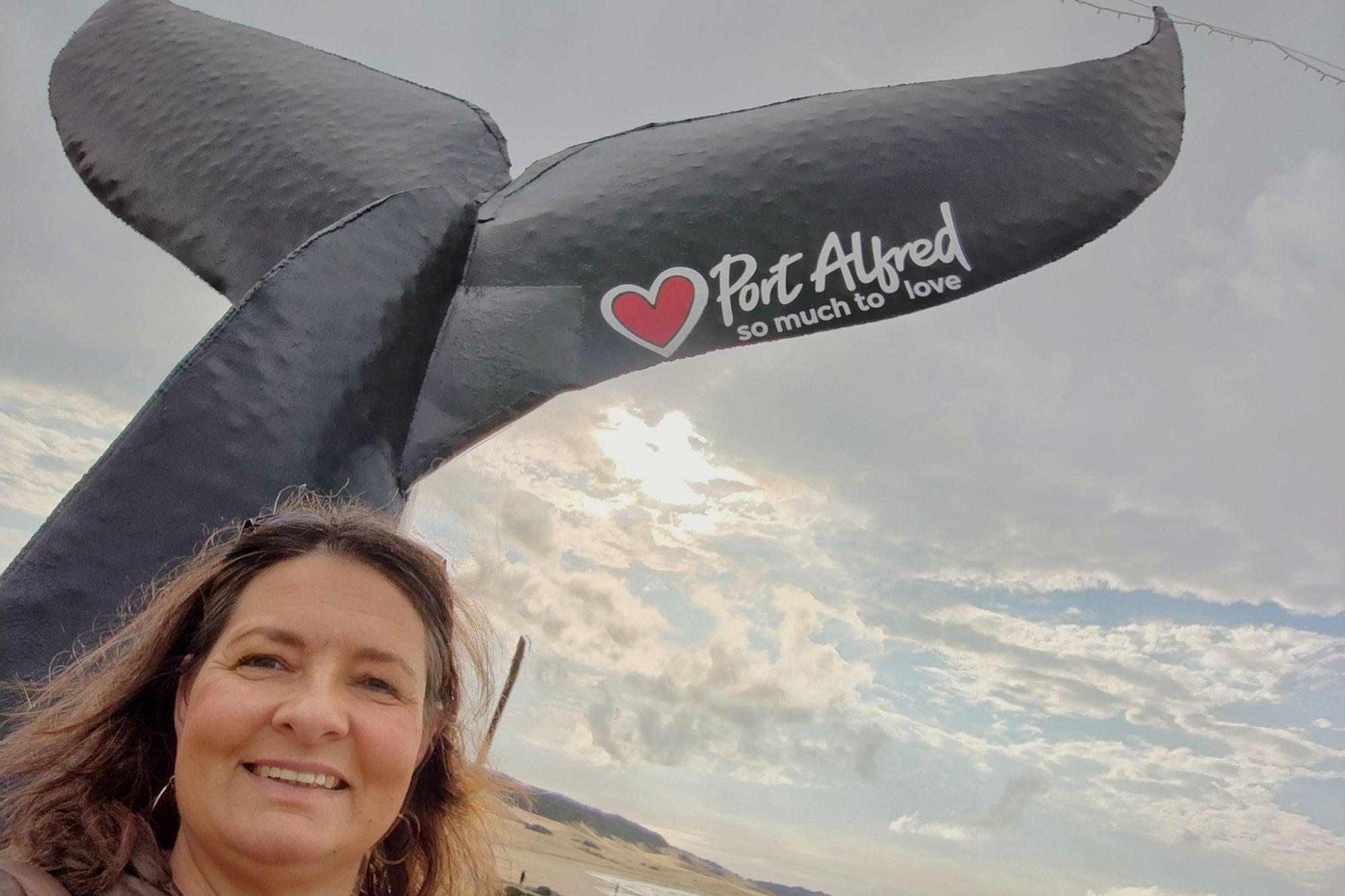
CapeNature ecologist Dr Martine Jordaan in Port Alfred.
The conference concluded with a formal function where the student prizes for best presentation were awarded to celebrate young and upcoming freshwater scientists. The society also acknowledges the excellence of established researchers in the field by handing out SASAqS medals. This year’s gold medal recipients were Prof Janine Adams, estuarine scientist from Nelson Mandela University and Prof Nico Smit, freshwater fish parasitologist from the North West University.
The awards served as a fitting reminder that the future of freshwater conservation depends on both nurturing young scientists and recognising those who have made lasting contributions to the discipline.
Related News

CapeNature visitors invited to support communities through new donation scheme
A visit to a CapeNature nature reserve can help a neighbour in need. From 5 October 2026, guests at three participating nature reserves can bring gently used clothing, blankets and other essential items for local non-profit organisations. The first phase of the donation scheme will run at Grootvadersbosch Nature Reserve near Heidelberg, Kogelberg Nature Reserve near Kleinmond, and Cederberg Wilderness Nature Reserve near Clanwilliam.

Radio network upgrade to strengthen emergency communication in Hangklip area
CapeNature and Overstrand Municipality will install a small radio repeater station near Hangklip Peak as part of an upgrade to the region’s radio communication network. The repeater will strengthen the communication networks used by both parties and improve coverage across the Overstrand municipal area, Kogelberg Nature Reserve, Betty’s Bay Marine Protected Area and parts of the City of Cape Town. Reliable radio communication is essential for the daily operations of

State of Conservation Report 2026 tracks progress and pressures facing Western Cape biodiversity
The Western Cape’s biodiversity is facing mounting pressure, with a sharp increase in the area affected by fires and more ecosystems and species classified as threatened, according to the Western Cape State of Conservation Report 2026. The report records 107 fires that burned 215 936 hectares during the 2025/26 reporting period – almost three times the 75 174 hectares burned by 97 fires in the previous reporting period.

El Niño raises fire risk as Western Cape prepares for a challenging fire season
The Western Cape is preparing for a potentially challenging wildfire season, with the developing El Niño weather pattern expected to contribute to hotter and drier conditions and an increased risk of wildfires across the province. The South African Weather Service has warned of below-normal rainfall associated with the expected strong El Niño during the coming summer season. While El Niño does not automatically mean that every part of the province will experience drought

Cape fur seal safety remains important this World Rabies Day
On World Rabies Day (28 September), CapeNature is reminding residents and visitors to keep a safe distance from Cape fur seals and to act immediately if they or their pets are bitten, scratched or exposed to a seal’s saliva. Rabies has been detected in Cape fur seals along the South African coastline and by the end of 2025, at least 176 people had been bitten by seals. While most seals do not pose a threat to people, they are wild animals and should never be approached, touched, fed or encouraged to interact with humans.

How Waste Affects Biodiversity and What We Can Do About It
Waste is more than an eyesore. Littered streets, polluted rivers and overflowing landfills are visible signs of a much wider environmental problem. Every year, people generate large volumes of waste, yet much of it is not managed effectively. In South Africa, more than 60% of waste has been reported as ending up in landfills. With service-delivery challenges and many major landfill sites approaching capacity, the pressure on communities and natural ecosystems continues to grow. Both terrestrial and aquatic biodiversity carry much of the impact.