
HeliHack volunteers clear 5 334 invasive pines from Boosmansbos
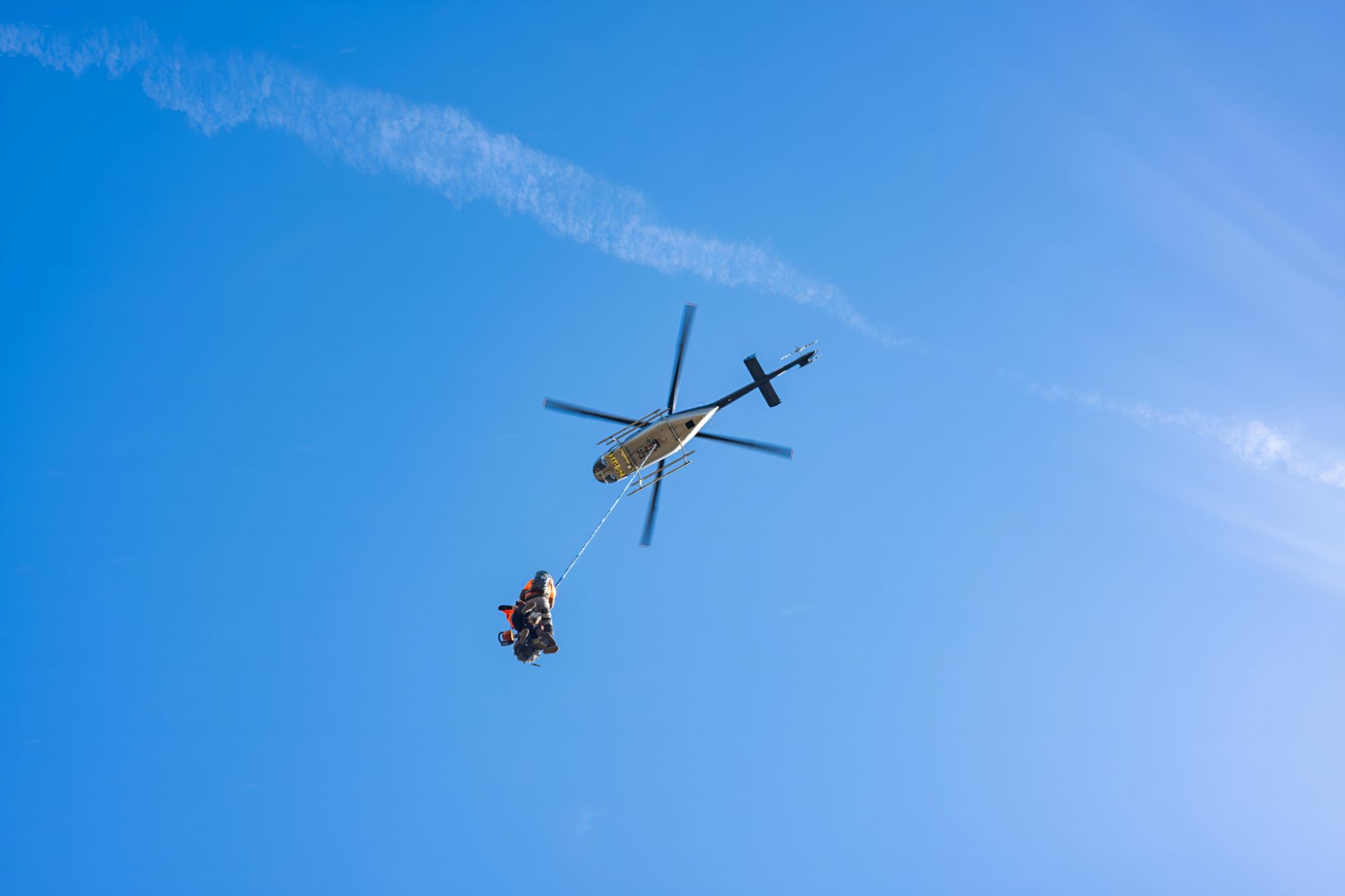
Twenty-three volunteers were flown by helicopter into the remote upper slopes of the Boosmansbos Wilderness Area from 23–25 October 2026, where they cut down 5 334 invasive alien pine trees across 904 hectares.
The operation, led by the HeliHack Initiative in partnership with CapeNature, comes as the region is still recovering from the wildfires of 2025. With the South African Weather Service forecasting a strong El Niño and warmer, drier conditions through the 2026/27 summer, the fire risk in the months ahead is high. Removing pines before the next fire reaches them is one of the most effective forms of mitigating the increased fire risk.
Boosmansbos lies in the Langeberg, north of Heidelberg, between Swellendam and Riversdale, alongside CapeNature’s Grootvadersbosch Nature Reserve. It is part of the Cape Floral Region Protected Areas World Heritage Site. Its sheltered kloofs hold some of the last intact Afromontane forest in the region: ancient indigenous forest surrounded by mountain fynbos. The area is home to species found nowhere else on earth, including the Boosmansbos long-tailed forest shrew (Myosorex longicaudatus boosmani).
The operation concentrated on the large, mature pines that produce vast quantities of seed, growing on the slopes around the main indigenous forest. Some of these trees are more than 40 years old.
Fynbos is adapted to burn, but not at the intensity that dense stands of invasive pine create. Pines carry far more fuel than the natural vegetation, so fires in invaded areas burn hotter, spread faster and are much harder to bring under control. These intense fires damage soil, leave slopes open to erosion and put firefighters, farms and homes at greater risk.
Fire also feeds the invasion. Pinecones release large quantities of seed after a burn, so an uncleared slope can come back far more heavily invaded than before. The 2025 fires showed how quickly a blaze can move through this landscape.
Clearing these pines now is fire prevention in the most practical sense. Every tree our partners and volunteers remove is fuel that will not be there when the next fire comes through, and that protects both the mountain and the communities below it.
The Boosmansbos Wilderness Area also lies within a nationally recognised Strategic Water Source Area, one of the small parts of the country that deliver a disproportionately large share of its water. The mountain catchment feeds the Duiwenhoks River and Dam, which supply around 15 000 residents in the towns downstream as well as the farmers whose crops and livestock rely on a steady flow of water.
Invasive pines use considerably more water than the fynbos they replace, reducing the flow that reaches rivers and dams. Keeping these catchments clear protects the water supply for everyone downstream and makes the system more resilient in dry years.
Over three days, the volunteers worked across steep, roadless terrain that ground teams cannot reach on foot in a practical timeframe. The helicopter put them directly onto the invaded slopes, so they could spend their time cutting rather than hiking. Felling large, decades-old pines on steep slopes is slow and demanding work, and each mature tree removed takes away a major seed source and a significant fire load from beside the forest.

This was the sixth HeliHack operation in Boosmansbos since the first pilot in April 2023. Including this operation, volunteers have cleared 48 523 invasive pines from the wilderness area across 7 284 hectares.
In 2024, CapeNature formalised the partnership through a three-year Memorandum of Agreement with the HeliHack Initiative. The agreement continues the flagship work at Boosmansbos and extends the helicopter-supported clearing model to four other CapeNature reserves.
ABOUT CapeNature
CapeNature is a public institution mandated to promote and ensure biodiversity conservation within the Western Cape and is the custodian of the Cape Floristic Region. The Entity manages most of the mountain catchments and reserves that supply ecosystem services to the citizens of the Western Cape. This requires good scientific data, a sound understanding of fynbos ecology and commitment to the principles of integrated biodiversity management and planning. Most of this work is in remote areas out of the public eye but has a direct bearing on the quality of life of millions of people in the province.
MEDIA ENQUIRIES:
CapeNature
General Manager: Advocacy
Petro van Rhyn
pvrhyn@capenature.co.za
071 231 7576
Related News

JOINT STATEMENT: Waterfall troop safe from urban harms for first time in over a decade
Contrary to misinformation on social media platforms, the Waterfall baboon troop is, for the first time in over a decade, safe from dangers in the urban environment. The troop is settling in at the wildlife centre at Kogelfontein, on land that is located in a natural area next to Table Mountain National Park. For the first time in over a decade, the Waterfall baboon troop is safe from dangers in the urban environment.

Record HeliHack clears almost 39 000 invasive pines from Jonkershoek’s Banhoek peaks
Volunteers flown by helicopter onto the Banhoek peaks in Jonkershoek Nature Reserve cleared 38 973 invasive pine trees over just three days (13–15 November 2026). It is the largest single HeliHack to date and the first to take place in the nature reserve. The operation surpasses the previous HeliHack record of 16 276 invasive pine trees, set in the Boosmansbos Wilderness Area in November 2025.
JOINT STATEMENT: Waterfall baboon troop adjusting well
The Waterfall troop is adjusting very well to their new environment at the Urban Wildlife Centre in Kogelfontein. The troop was relocated from Simon’s Town to Kogelfontein over the past weekend. The Cape Peninsula Baboon Management Joint Task Team (CPBMJTT) consisting of representatives from SANParks, CapeNature, and the City of Cape Town, can confirm that the 44 baboons who have been relocated to the Urban Wildlife Centre are adjusting well to their new environment.

CapeNature wins gold at the South African Podcast Awards
Green Noise, CapeNature's conservation and sustainability podcast, has won gold in the Best Education category at the 2026 South African Podcast Awards, announced on Wednesday, 11 November 2026. The CapeNature team watched the results at the official watch party at the Labia Theatre in Cape Town, while a second watch party was held simultaneously in Johannesburg. The awards show premiered on YouTube, with 108 award placements announced across craft, genre, impact and special honours.
JOINT STATEMENT: Waterfall baboon troop successfully relocated to Urban Wildlife Centre
The Cape Peninsula Baboon Management Joint Task Team (CPBMJTT) consisting of representatives from SANParks, CapeNature, and the City of Cape Town, can confirm that the Waterfall troop has been successfully relocated from Simon’s Town. The operation started on Friday, 13 November 2026, after the necessary permits were issued on Thursday, 12 November 2026. The troop is adjusting well to their new environment at the Urban Wildlife Centre in Kogelfontein

3 ways to reconnect at Rocherpan
Sometimes, the best plans are the ones that leave a little room to breathe. If your days have been filled with notifications, to-do lists and rushing from one thing to the next, a West Coast break might be just what you need. Rocherpan Nature Reserve, near Dwarskersbos on the Cape West Coast, offers a chance to enjoy birdwatching, coastal walks and laid-back time in nature. Whether you're planning a weekend with friends, a break with your partner or a little time away from the usual routine, here are three ways to reconnect at Rocherpan.