
Picking a wildflower? Everyday choices can amount to biodiversity crime in Protected Areas
Biodiversity crime is often associated with poaching or illegal wildlife trafficking, but some of the most common offences threatening the Western Cape's environment stem from the everyday actions of ordinary visitors to Protected Areas.
Entering Protected Areas without a valid permit, fishing without the required licence, leaving designated hiking trails, picking wildflowers, removing rocks or shells as souvenirs, or disturbing wildlife may seem harmless, but these actions can damage fragile ecosystems and undermine conservation efforts.
Nature is not a souvenir to be taken home, a shortcut to be explored off-trail, or a playground without rules. The Western Cape's biodiversity depends on the responsibility of all who visit Protected Areas. While many biodiversity offences may seem minor in isolation, their cumulative impact can be significant. By making responsible choices and respecting the regulations that protect our environment, every visitor can contribute to safeguarding our biodiversity.
CapeNature works closely with law enforcement partners, conservation agencies and local communities to prevent biodiversity crime through enforcement, education and public awareness. Between April and June 2026, CapeNature officials registered 10 cases, six of which involved flora, three involved fauna and one involved a marine species. CapeNature also issued 48 fines for contraventions of legislation. Of these fines, 12 were issued for contraventions of the Marine Living Resources Act, three were issued for the illegal use of vehicles in the coastal zone and 33 were issued for contraventions of the Nature Conservation Ordinance. Of the latter 33 fines, 20 were issued for offences committed in nature reserves, seven were issued for offences involving wild animals and six were issued for offences involving flora.
Earlier this year, CapeNature secured a significant enforcement outcome when a Spanish national was convicted for the illegal possession and importation into the Province of 22 armadillo girdled lizards and a speckled dwarf tortoise. The joint CapeNature and SAPS investigation resulted in a R500 000 fine. The confiscated animals were placed in an appropriate care facility. Both species are highly sensitive to removal from the wild and harvesting them for the illegal pet trade can place local populations at risk.
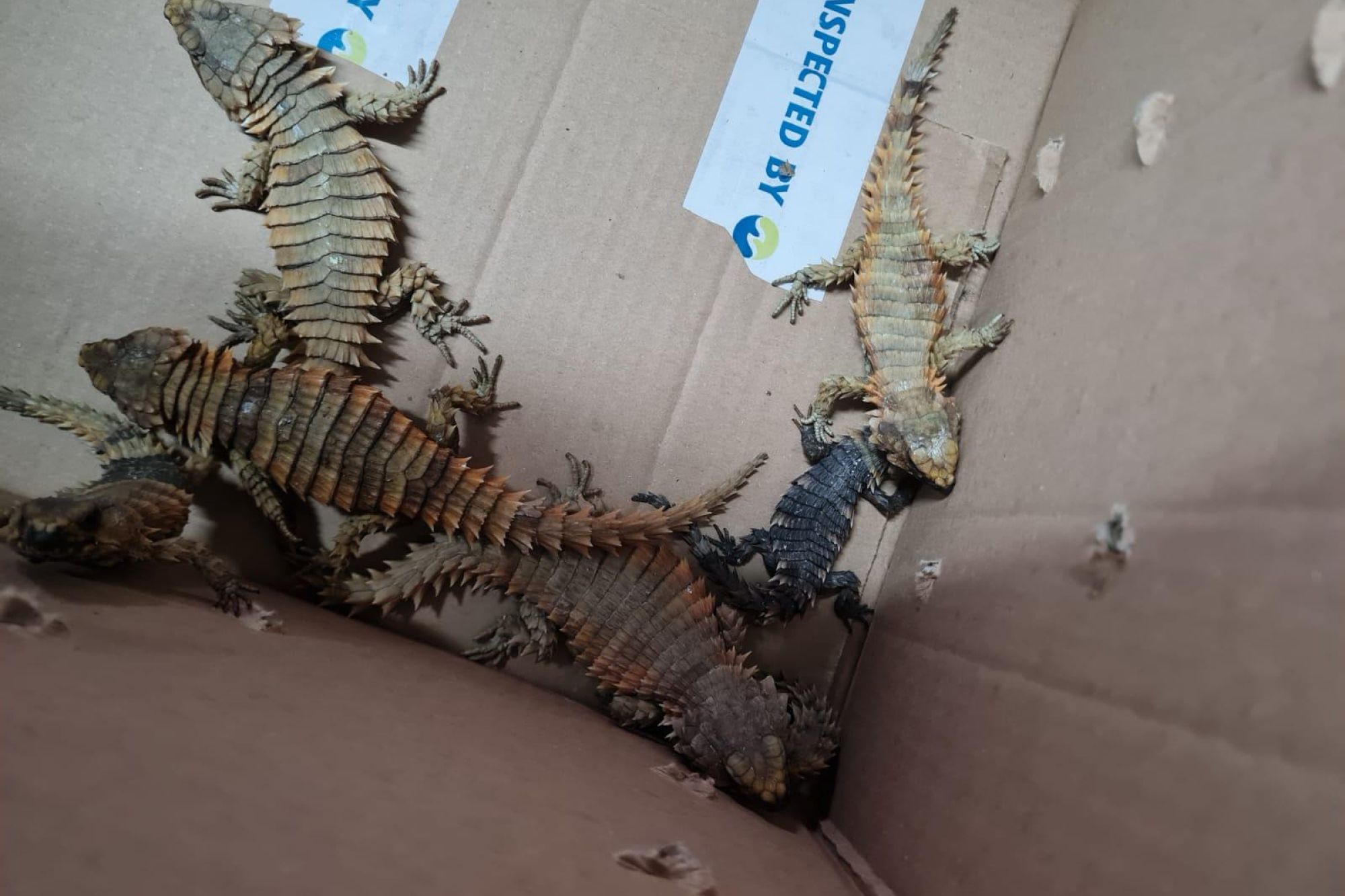
Some of the confiscated lizards found from a case on 18 October 2025 where SAPS Vanrhynsdorp, together with members from CapeNature, performed a search of a long-distance bus on its way to Cape Town. During the search, a 25-year-old male passenger, that had boarded the bus in the Northern Cape, was found in possession of 167 armadillo girdled lizards (Ouroborus cataphractus).
The public can help in protecting biodiversity by purchasing the correct permits before entering Protected Areas or participating in regulated activities such as recreational fishing, staying on designated hiking trails to prevent erosion and protect sensitive habitats, and leaving plants, flowers, rocks, shells and other natural objects where they belong for everyone to enjoy. Visitors can also help by respecting catch limits and fishing regulations, avoiding disturbance to wildlife, and reporting suspicious or illegal activities in nature areas.
Information received from the public can play an important role in supporting investigations and helping to bring perpetrators to justice.
Whether purchasing a permit, staying on designated trails or reporting suspicious activity, CapeNature says every responsible action helps safeguard the landscapes, species and ecosystems that make the Western Cape one of the world's biodiversity hotspots.
Report any suspicious activity related to biodiversity crime to the nearest police station or call CapeNature on 087 087 9262 or contact the CRIME STOP TIP-OFF-LINE on 08600 10 111.
ABOUT CapeNature
CapeNature is a public institution mandated to promote and ensure biodiversity conservation within the Western Cape and is the custodian of the Cape Floristic Region. The Entity manages most of the mountain catchments and reserves that supply ecosystem services to the citizens of the Western Cape. This requires good scientific data, a sound understanding of fynbos ecology and commitment to the principles of integrated biodiversity management and planning. Most of this work is in remote areas out of the public eye but has a direct bearing on the quality of life of millions of people in the province.
MEDIA ENQUIRIES:
CapeNature
General Manager: Advocacy
Petro van Rhyn
pvrhyn@capenature.co.za
071 231 7576
Related News

CapeNature visitors invited to support communities through new donation scheme
A visit to a CapeNature nature reserve can help a neighbour in need. From 5 October 2026, guests at three participating nature reserves can bring gently used clothing, blankets and other essential items for local non-profit organisations. The first phase of the donation scheme will run at Grootvadersbosch Nature Reserve near Heidelberg, Kogelberg Nature Reserve near Kleinmond, and Cederberg Wilderness Nature Reserve near Clanwilliam.

Radio network upgrade to strengthen emergency communication in Hangklip area
CapeNature and Overstrand Municipality will install a small radio repeater station near Hangklip Peak as part of an upgrade to the region’s radio communication network. The repeater will strengthen the communication networks used by both parties and improve coverage across the Overstrand municipal area, Kogelberg Nature Reserve, Betty’s Bay Marine Protected Area and parts of the City of Cape Town. Reliable radio communication is essential for the daily operations of

State of Conservation Report 2026 tracks progress and pressures facing Western Cape biodiversity
The Western Cape’s biodiversity is facing mounting pressure, with a sharp increase in the area affected by fires and more ecosystems and species classified as threatened, according to the Western Cape State of Conservation Report 2026. The report records 107 fires that burned 215 936 hectares during the 2025/26 reporting period – almost three times the 75 174 hectares burned by 97 fires in the previous reporting period.

El Niño raises fire risk as Western Cape prepares for a challenging fire season
The Western Cape is preparing for a potentially challenging wildfire season, with the developing El Niño weather pattern expected to contribute to hotter and drier conditions and an increased risk of wildfires across the province. The South African Weather Service has warned of below-normal rainfall associated with the expected strong El Niño during the coming summer season. While El Niño does not automatically mean that every part of the province will experience drought

Cape fur seal safety remains important this World Rabies Day
On World Rabies Day (28 September), CapeNature is reminding residents and visitors to keep a safe distance from Cape fur seals and to act immediately if they or their pets are bitten, scratched or exposed to a seal’s saliva. Rabies has been detected in Cape fur seals along the South African coastline and by the end of 2025, at least 176 people had been bitten by seals. While most seals do not pose a threat to people, they are wild animals and should never be approached, touched, fed or encouraged to interact with humans.

How Waste Affects Biodiversity and What We Can Do About It
Waste is more than an eyesore. Littered streets, polluted rivers and overflowing landfills are visible signs of a much wider environmental problem. Every year, people generate large volumes of waste, yet much of it is not managed effectively. In South Africa, more than 60% of waste has been reported as ending up in landfills. With service-delivery challenges and many major landfill sites approaching capacity, the pressure on communities and natural ecosystems continues to grow. Both terrestrial and aquatic biodiversity carry much of the impact.