
The Critically Endangered Caledon Conebush
The critically endangered Caledon conebush, Leucadendron elimense subsp. salteri, occurs in an area of less than 9 km², in four small, severely fragmented subpopulations. It continues to decline due to alien plant invasion, ongoing habitat loss to agriculture, and wildflower harvesting. Most subpopulations are on isolated fragments among crop fields in the Bot River Valley, Hemel-en-Aarde Valley and Shaw’s Pass, and only one is formally conserved, the one found in Craigantlet Nature Reserve situated near the town of Bot River.
Leucadendron Leucadendron elimense subsp. salteri. Leucadendron elimense subsp. salteri is a shrub growing up to 1.5m and is sparsely branched. It is a dioecious plant, meaning the female and male flowers are on separate plants. It flowers between August and September and is pollinated by insects. The parent plants are killed by fire, but the seeds are stimulated by fire to germinate.
Reference: Protea Atlas https://www.proteaatlas.org.za...
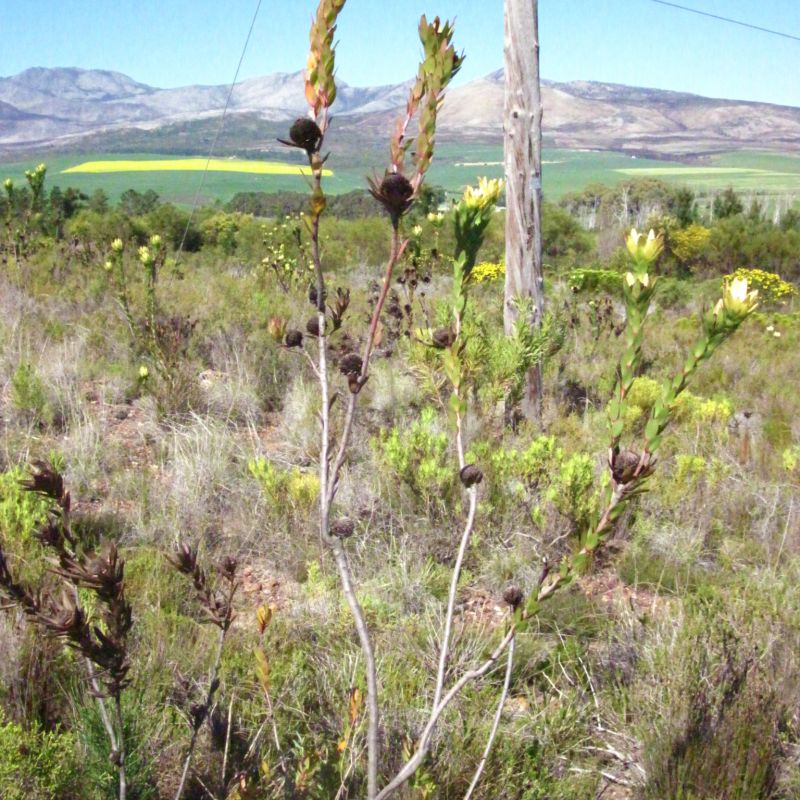
Caledon conebush, Leucadendron elimense subsp. salteri, beneath Eskom powerlines (Photo: A. Brink).
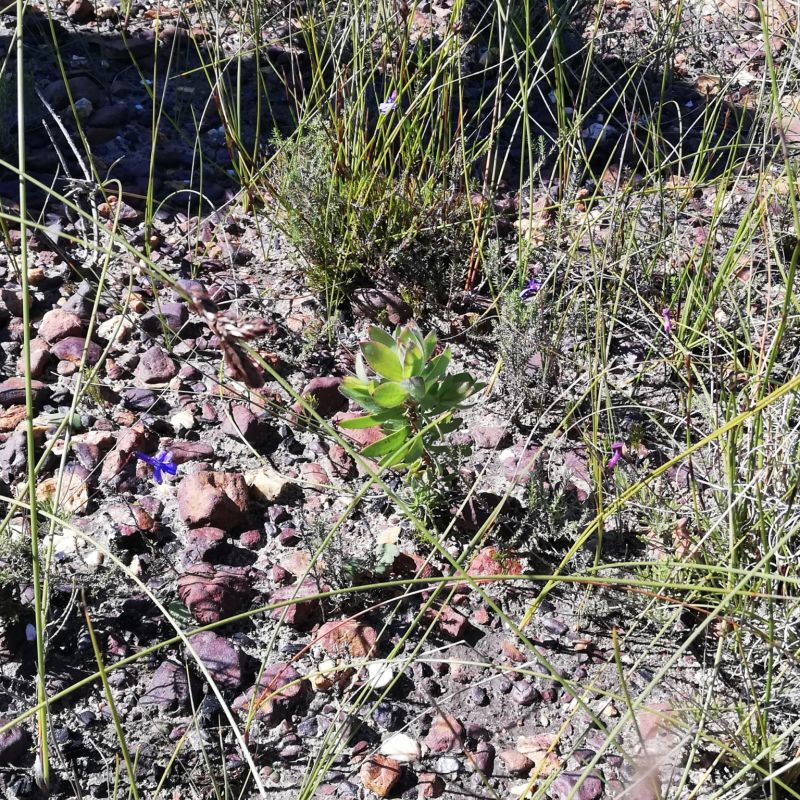
A Caledon conebush seedling (Photo: A. Brink).
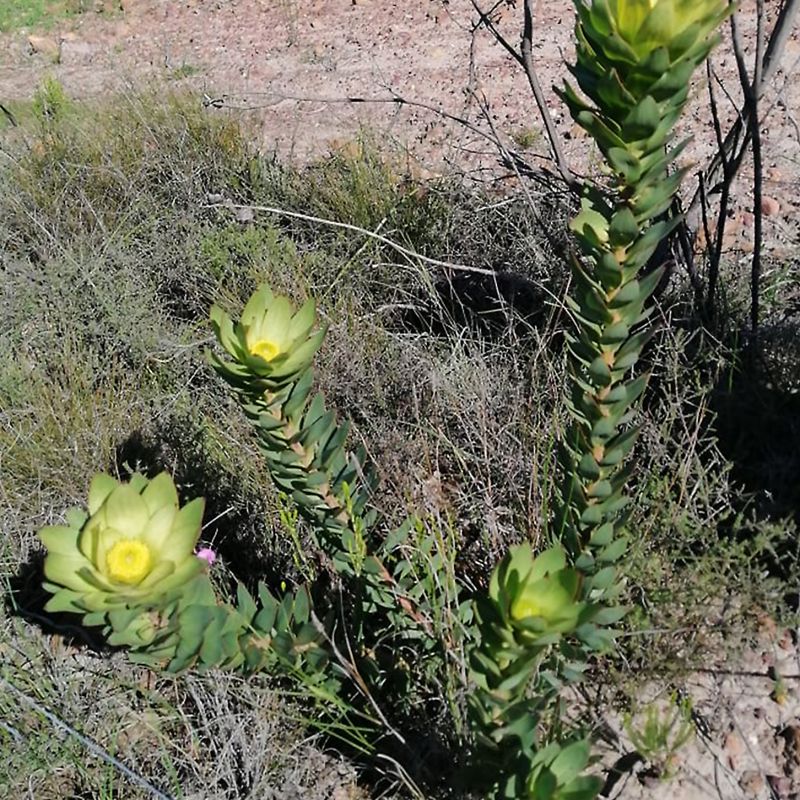
A male Caledon conebush plant near an agricultural field (Photo: S.D. Gildenhuys).
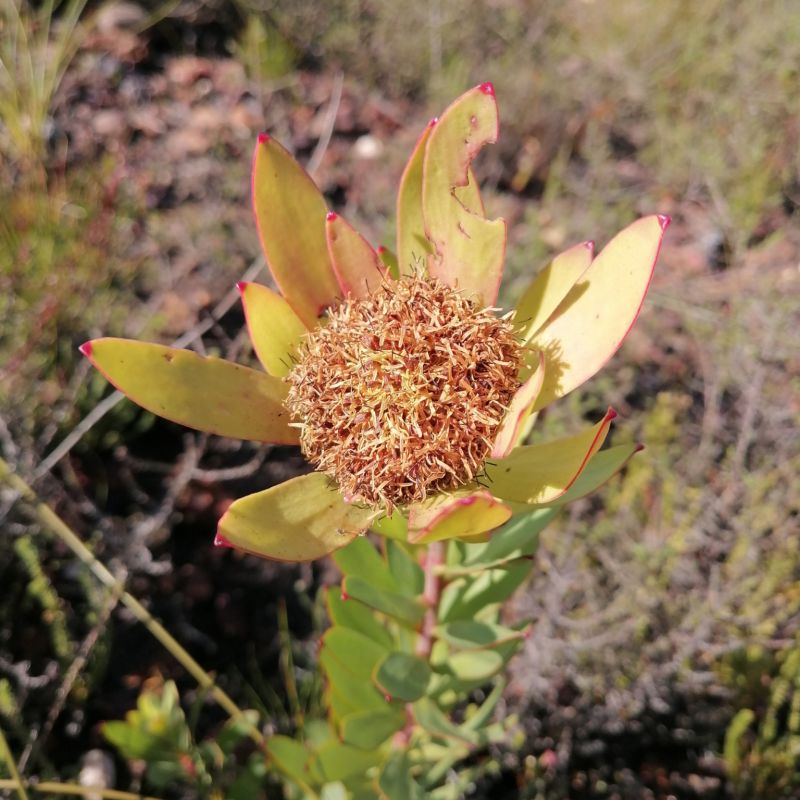
An almost dried up male Caledon conebush flower head (Photo: S.D. Gildenhuys).
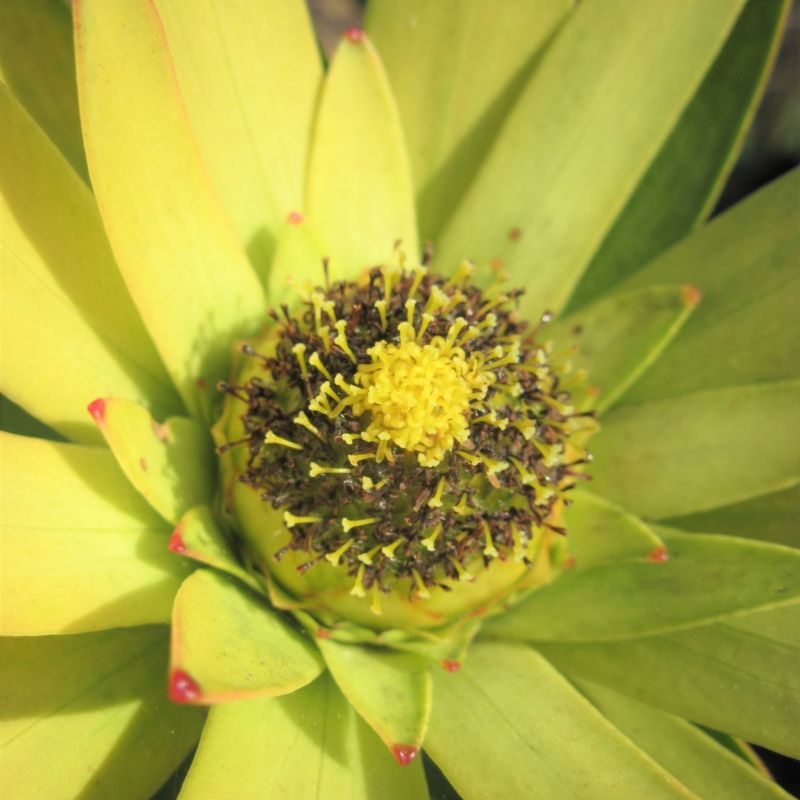
The female Caledon conebush flower head (Photo: A. Brink).
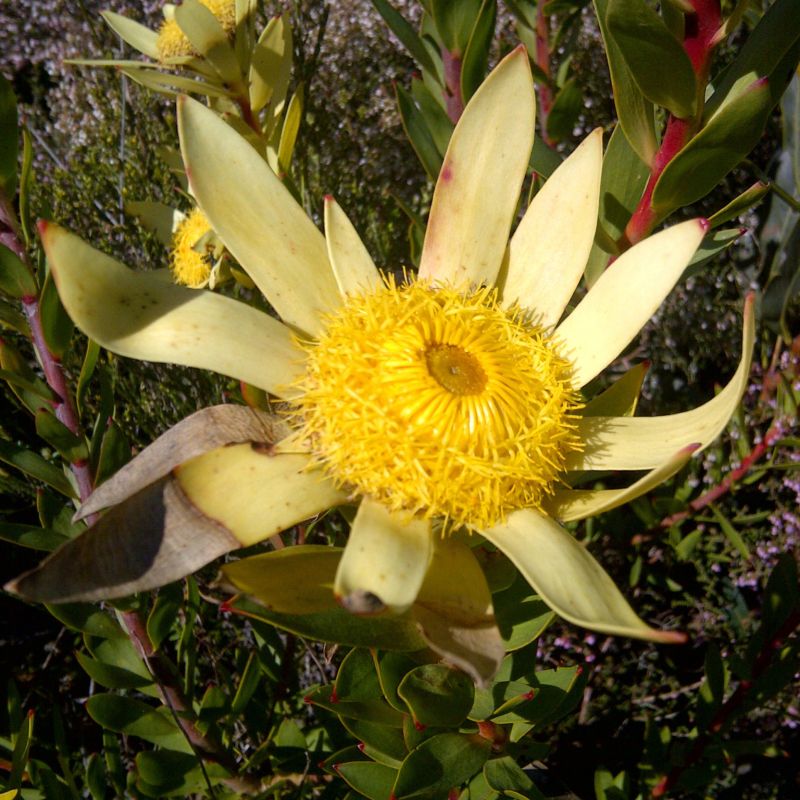
A male Caledon conebush flowerhead (Photo: S.D. Gildenhuys).
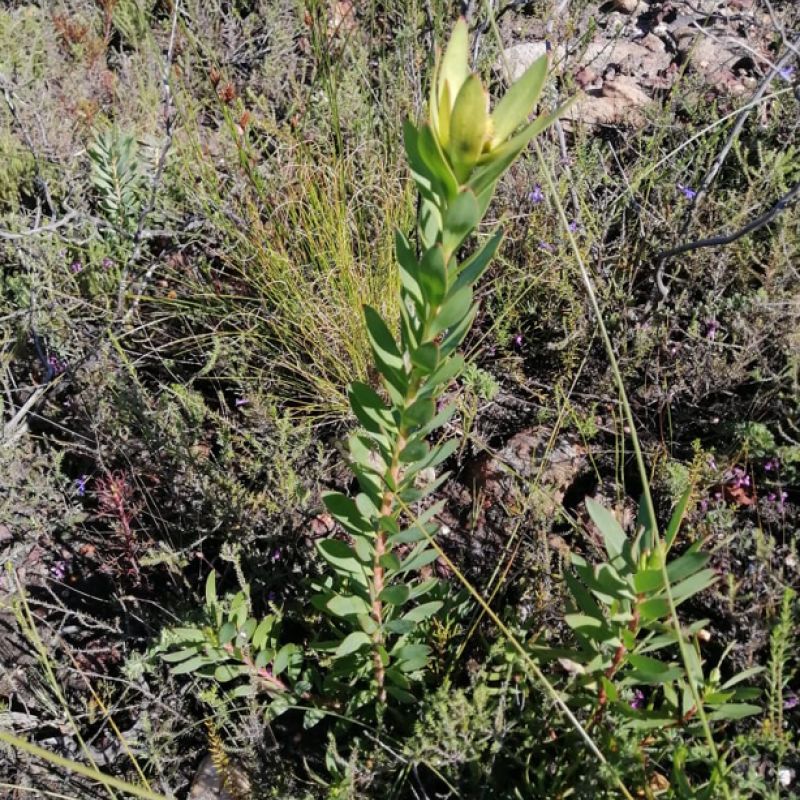
A young Caledon conebush plant (Photo: S.D. Gildenhuys).
Related News

State of Conservation Report 2026 tracks progress and pressures facing Western Cape biodiversity
The Western Cape’s biodiversity is facing mounting pressure, with a sharp increase in the area affected by fires and more ecosystems and species classified as threatened, according to the Western Cape State of Conservation Report 2026. The report records 107 fires that burned 215 936 hectares during the 2025/26 reporting period – almost three times the 75 174 hectares burned by 97 fires in the previous reporting period.

2025 Conservation Review Highlights Biodiversity
CapeNature showcased its significant achievements in conservation operations and exceptional biodiversity protection over the past year.

State of Conservation 2025: Progress & Priorities
CapeNature launched the 2025 State of Conservation Report this morning at its annual Conservation Review, offering a clear, evidence-based view of the Western Cape’s biodiversity and how conservation efforts are measuring up.

Haarwegskloof Declared Nature Reserve
In a major victory for biodiversity conservation, Haarwegskloof, which includes the largest remaining connected stretch of renosterveld left on Earth has officially been declared a provincial nature reserve.

Forge’s top five family-friendly hikes to do this festive season
It’s the festive season, baby! And for many families across South Africa, that means packing the boogie boards and hiking boots and heading out of town. CapeNature reserves are naturally a first choice for family vacations over the festive season, and we want to help you get the most out of your next trip.
