
BOCMA & CapeNature Boost Water Sustainability
On 8 May 2025 a capacity building event was held at the Barn Owl Conference Venue in Vrolijkheid Nature Reserve provided by the Breede Olifants Catchment Management Agency (BOCMA) to CapeNature staff from Landscape South and Central. BOCMA are responsible for implementing the National Water Act (NWA) within the Breede and Gouritz catchments, which regulates water use. A similar event was held in Oudtshoorn with the Landscape East staff on 23 May 2025. Water is an essential natural resource that requires responsible management to ensure the sustainability of the resource both for human use and ecological function.
CapeNature needs to be familiar with the NWA, as we require water for use within our nature reserves, which are mainly outside of the municipal provision for towns. We have embarked on a process of registering our water uses across the province, with many of the water uses dating back many decades before the NWA. We also have external parties who abstract water from our nature reserves. CapeNature, therefore, invited BOCMA to provide capacity building regarding the NWA to the Conservation Managers and Officers both on reserve and off reserve.
The first presentation focused on institutional and stakeholder relations and provided an overview of BOCMA and its area of operation. Insights into the support provided to communities in supplying rainwater harvesting tanks for setting up food gardens were also provided.
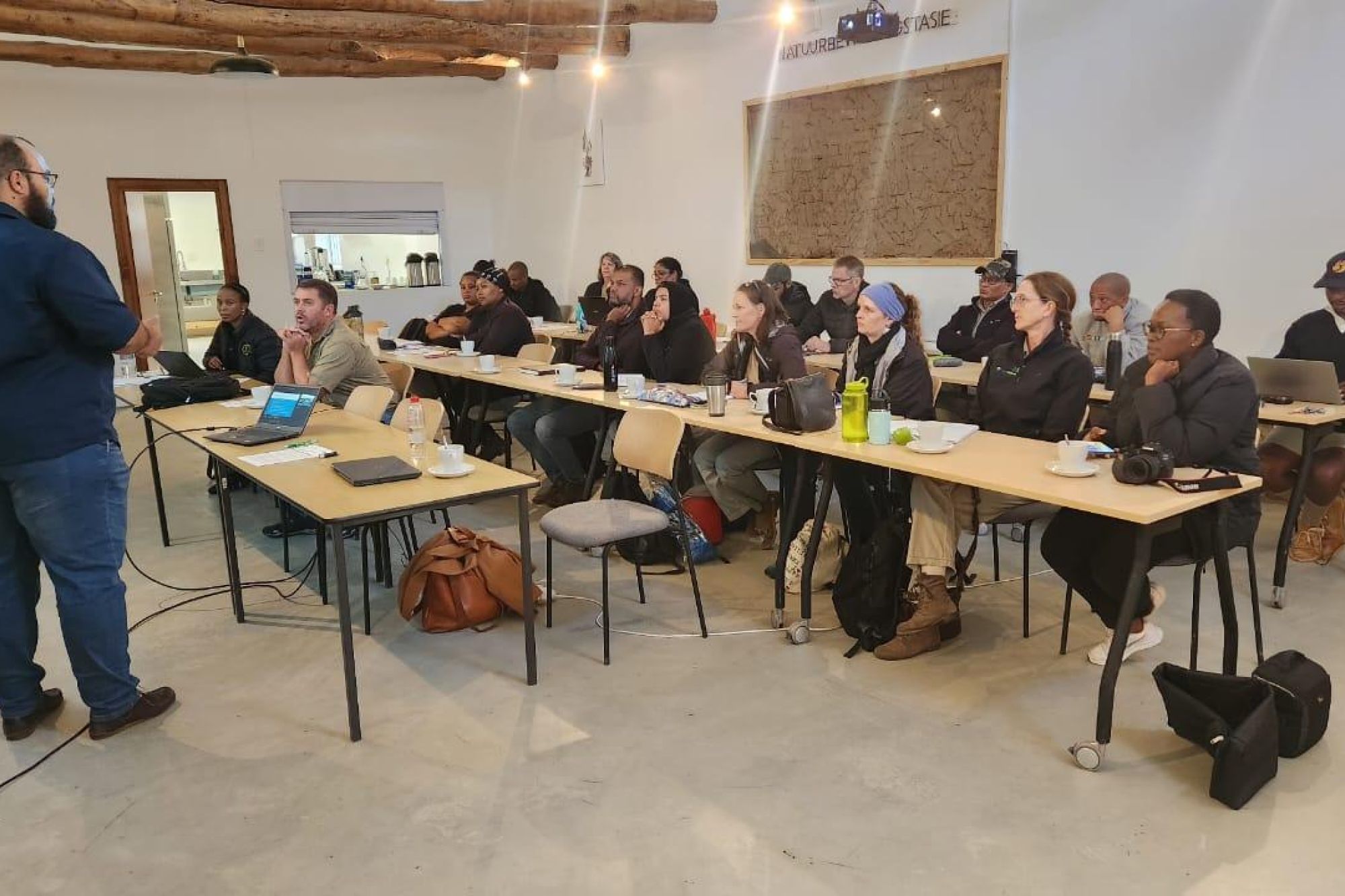
The second presentation dealt with water use licensing for nature reserves, outlining the application requirements for water use. Water uses are not only those we typically associate with water use, such as abstraction and storing water, but also activities which could impact watercourses, such as impeding flow or altering the banks. Depending on the type and scale of water use, authorisation can be obtained through a water use license application (WULA) general authorisation, schedule 1 exemption or existing lawful use.
The final presentation dealt with compliance monitoring and enforcement. The NEMA activities, which CapeNature off-reserve staff report to DEA&DP related to rivers and wetlands, also transgress the NWA. Guidance was provided regarding the completion of the BOCMA complaint form for unlawful activities, and processes followed for law enforcement were outlined.

The capacity building event was very well received as the information is useful for implementation, and much of it was new to the participants. There was active engagement from the participants, which helped to forge a relationship with BOCMA, which is a very important partner for CapeNature. The event will hopefully spur continued collaboration among the key authorities in the landscape, particularly within the agricultural sector.
Related News

CapeNature visitors invited to support communities through new donation scheme
A visit to a CapeNature nature reserve can help a neighbour in need. From 5 October 2026, guests at three participating nature reserves can bring gently used clothing, blankets and other essential items for local non-profit organisations. The first phase of the donation scheme will run at Grootvadersbosch Nature Reserve near Heidelberg, Kogelberg Nature Reserve near Kleinmond, and Cederberg Wilderness Nature Reserve near Clanwilliam.

Radio network upgrade to strengthen emergency communication in Hangklip area
CapeNature and Overstrand Municipality will install a small radio repeater station near Hangklip Peak as part of an upgrade to the region’s radio communication network. The repeater will strengthen the communication networks used by both parties and improve coverage across the Overstrand municipal area, Kogelberg Nature Reserve, Betty’s Bay Marine Protected Area and parts of the City of Cape Town. Reliable radio communication is essential for the daily operations of

State of Conservation Report 2026 tracks progress and pressures facing Western Cape biodiversity
The Western Cape’s biodiversity is facing mounting pressure, with a sharp increase in the area affected by fires and more ecosystems and species classified as threatened, according to the Western Cape State of Conservation Report 2026. The report records 107 fires that burned 215 936 hectares during the 2025/26 reporting period – almost three times the 75 174 hectares burned by 97 fires in the previous reporting period.

El Niño raises fire risk as Western Cape prepares for a challenging fire season
The Western Cape is preparing for a potentially challenging wildfire season, with the developing El Niño weather pattern expected to contribute to hotter and drier conditions and an increased risk of wildfires across the province. The South African Weather Service has warned of below-normal rainfall associated with the expected strong El Niño during the coming summer season. While El Niño does not automatically mean that every part of the province will experience drought

Cape fur seal safety remains important this World Rabies Day
On World Rabies Day (28 September), CapeNature is reminding residents and visitors to keep a safe distance from Cape fur seals and to act immediately if they or their pets are bitten, scratched or exposed to a seal’s saliva. Rabies has been detected in Cape fur seals along the South African coastline and by the end of 2025, at least 176 people had been bitten by seals. While most seals do not pose a threat to people, they are wild animals and should never be approached, touched, fed or encouraged to interact with humans.

How Waste Affects Biodiversity and What We Can Do About It
Waste is more than an eyesore. Littered streets, polluted rivers and overflowing landfills are visible signs of a much wider environmental problem. Every year, people generate large volumes of waste, yet much of it is not managed effectively. In South Africa, more than 60% of waste has been reported as ending up in landfills. With service-delivery challenges and many major landfill sites approaching capacity, the pressure on communities and natural ecosystems continues to grow. Both terrestrial and aquatic biodiversity carry much of the impact.