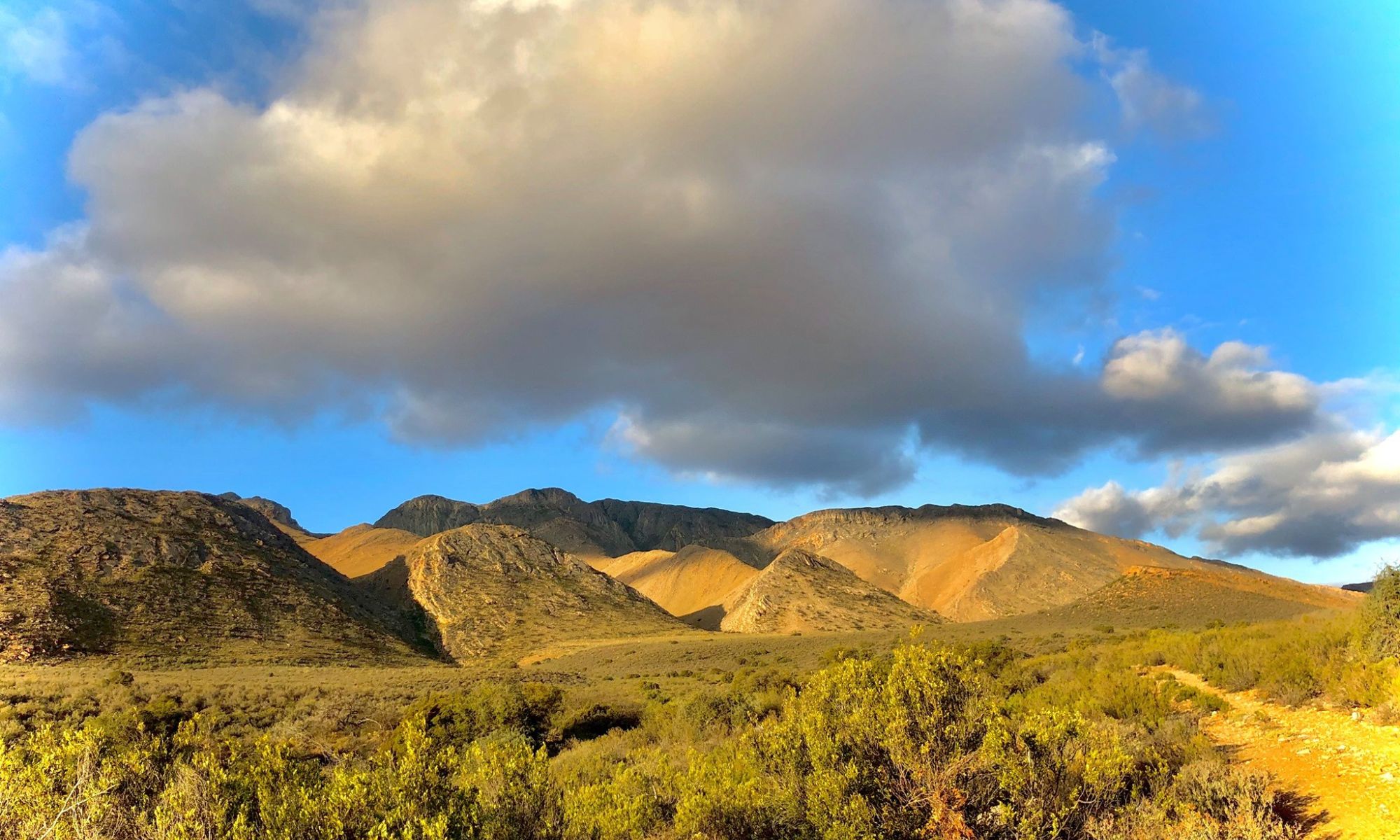
New Lettas Kraal Nature Reserve declared in Succulent Karoo
CapeNature welcomes another addition to the Western Cape’s growing Protected Area Estate with the formal declaration of Lettas Kraal Nature Reserve.
Lettas Kraal is situated 30 km south-east of Touwsriver and encompasses 7 050 hectares of natural rangeland in the Little Karoo, within the Succulent Karoo biome, an internationally recognised biodiversity hotspot.
Western Cape Provincial Minister of Local Government, Environmental Affairs and Development Planning Anton Bredell, welcomed the latest declaration.
Lettas Kraal’s inclusion in our protected area network is another positive stride towards achieving the province’s conservation goals. Each new reserve declared not only protects species and habitats but also strengthens the ecological networks that sustain local communities and the provincial economy. Every hectare protected ensures that our children will inherit a healthier and more resilient environment.
CapeNature facilitates the legal administrative process to declare these sites as Protected Areas in terms of the National Environmental Management Protected Areas Act whilst the Endangered Wildlife Trust collaborated with CapeNature and the landowners, Johan and Tessa Roodt, to take the property through the declaration process. The Nature Reserve was declared on 7 November 2025.
The declaration of this new Nature Reserve is amply supported by various scientific assessments. The initial desktop survey was conducted in early 2019 and led to the property's declaration as a Contract Nature Reserve by CapeNature. A more comprehensive biodiversity survey was undertaken in 2020, combining extensive camera trapping with a week-long specialist-led field survey to catalogue the property's ecological richness.
The camera trap survey was conducted by deploying 78 single camera trap stations randomly across the property within a grid setting for 57 days. The intention was to capture a broad spectrum of species, including shy and nocturnal species not usually observed. Altogether 3 008 images were captured at all stations for a total of 43 species, including brown hyena, leopard, honey badger and the Critically Endangered riverine rabbit.
Further surveys have revealed many additional species, including 9 butterfly, 7 moth, 97 bird, 11 lizards and skinks, 1 tortoise, 1 terrapin, 11 snake, 4 frog and 4 scorpion species. Additionally, 814 plant species have been recorded on the property, including several possibly new species, confirming the botanical value of the property in terms of plant species diversity.
We applaud every landowner who takes the bold step to have their property declared a protected area. While the path to declaration can be complex, CapeNature has committed to supporting landowners who want to play a role in expanding the Western Cape’s Protected Area Network.
The declaration of Lettas Kraal Nature Reserve is yet another example of the successful partnership between government, conservation agencies and landowners working together to secure the Western Cape’s biodiversity both now and into the future.
Landowners who are considering having their land formally protected can contact CapeNature’s Stewardship Team at wcpaes2025@capenature.co.za.
Related News

Penguin Palooza 2026 returns to Stony Point in support of African Penguin conservation
Stony Point in Betty’s Bay is one of the last known locations on Earth where African Penguins still breed on the mainland, and the species is under growing pressure. On Saturday, 7 November 2026, Penguin Palooza returns to Stony Point Nature Reserve, giving the public a chance to learn about the species and the work CapeNature, SANCCOB and other partners are doing to protect it.

Robberg Nature Reserve named Best Outdoor Activity in 2026 Readers’ Choice Awards
Robberg Nature Reserve named Best Outdoor Activity in 2026 Readers’ Choice Awards. Robberg Nature Reserve has been named the Best Outdoor Activity in the Best of Knysna & Plett Readers’ Choice Awards 2026. The recognition follows months of nominations and voting by communities across Knysna, Plettenberg Bay and Sedgefield, making the award a meaningful reflection of the place Robberg holds in the local community.

CapeNature maintains clean audit record and expands the Western Cape’s Protected Areas
CapeNature's 2025/26 Annual Report shows the Entity added more than 44 000 hectares to the Western Cape conservation estate over the year. The additions extend protection across mountain catchments that feed the province's water supply, guarding them against the invasive plant growth and wildfire risk that threaten water security. Ultimately the protected areas expansion improves our ability to conserve the rich and unique Western Cape biodiversity.

WESSA recognises 62 Blue Flags and 19 Green Coast sites as South Africa marks 25 years of coastal stewardship
South Africa’s Blue Flag and Green Coast programmes are entering their next chapter with a renewed focus on environmental stewardship, inclusion, community participation and long-term coastal resilience, as WESSA, the Wildlife and Environment Society of South Africa, celebrates 25 years of Blue Flag in South Africa and its own centenary.

CapeNature visitors invited to support communities through new donation scheme
A visit to a CapeNature nature reserve can help a neighbour in need. From 5 October 2026, guests at three participating nature reserves can bring gently used clothing, blankets and other essential items for local non-profit organisations. The first phase of the donation scheme will run at Grootvadersbosch Nature Reserve near Heidelberg, Kogelberg Nature Reserve near Kleinmond, and Cederberg Wilderness Nature Reserve near Clanwilliam.

Radio network upgrade to strengthen emergency communication in Hangklip area
CapeNature and Overstrand Municipality will install a small radio repeater station near Hangklip Peak as part of an upgrade to the region’s radio communication network. The repeater will strengthen the communication networks used by both parties and improve coverage across the Overstrand municipal area, Kogelberg Nature Reserve, Betty’s Bay Marine Protected Area and parts of the City of Cape Town. Reliable radio communication is essential for the daily operations of