
Newly discovered species named after CapeNature Ecologist, Dr Martine Jordaan
A newly described Paradiplozoon species has been named after CapeNature Fauna Ecologist, Dr Martine Jordaan, in recognition of her knowledge and passion for the aquatic life of the Cape Fold Ecoregion, continuous enthusiasm to study the region's fishes and understanding their parasitofauna.
The newly identified species – Paradiplozoon jordaanae – is named after Dr Jordaan and was described through studies of parasites found on the gills of two near-threatened endemic freshwater fish species — the Clanwilliam sawfin (Cheilobarbus serra) and the Clanwilliam redfin (Sedercypris calidus) — from the Matjies and Rondegat rivers in the Cape Fold Ecoregion.

A rare sight into the underwater world of the Rondegat River in the Cederberg from where P. jordaanae was first found.
CapeNature CEO Dr Ashley Naidoo said the recognition highlighted the importance of collaboration in advancing conservation science in the Western Cape.
Having a species named after Dr Jordaan is significant recognition, not only for her personally, but also for the freshwater biodiversity work being undertaken within the Cape Fold Ecoregion. This collaboration demonstrates how partnerships, both formal and informal, between conservationists and academic researchers can deepen scientific understanding and strengthen conservation outcomes. CapeNature is proud to see Dr Jordaan’s contribution recognised in this way.
The species was identified by researchers from the Water Research Group at North-West University (NWU) following a collaboration that began nearly six years ago, when Dr Jordaan encountered an unusual fish parasite during fieldwork on redfin fish. The parasite in this case was a fish ectoparasitic flatworm, not seen in the rivers of the Cape ecoregion for many years.
The discovery led to closer cooperation between Dr Jordaan and researchers from NWU, combining field-based conservation work with advanced laboratory research to better understand freshwater ecosystems and aquatic biodiversity.
As part of the ongoing collaboration, Dr Jordaan assisted researchers with extensive fish surveys and field sampling across river systems in the Western Cape, supporting work investigating parasite biodiversity, fish health, and species conservation.
For me, the specialness of it is seeing how your little bit feeds into something bigger. It really shows the value of collaboration and what can be achieved when people with different expertise work towards the same goal.
The collaboration highlighted how field ecologists and laboratory researchers rely on one another to advance scientific understanding, with Dr Jordaan providing field expertise and access to freshwater systems while researchers conducted specialist parasite identification and genetic analysis.
The work has also contributed to broader discussions about the ecological role of parasites and their importance to healthy biodiversity systems. While the word “parasite” often carries negative connotations, non-pathogenic parasites that pose no risk to humans or animals warrant conservation, as they are a unique part of local biodiversity.
Dr Jordaan said conservation science often depends on partnerships that allow specialists from different fields to contribute towards a common conservation objective.
In the case of fish parasites, there is this whole undiscovered world that you can basically only access under a microscope. And as conservation is such an applied and practical field, we do not always have time to investigate these specialist disciplines.
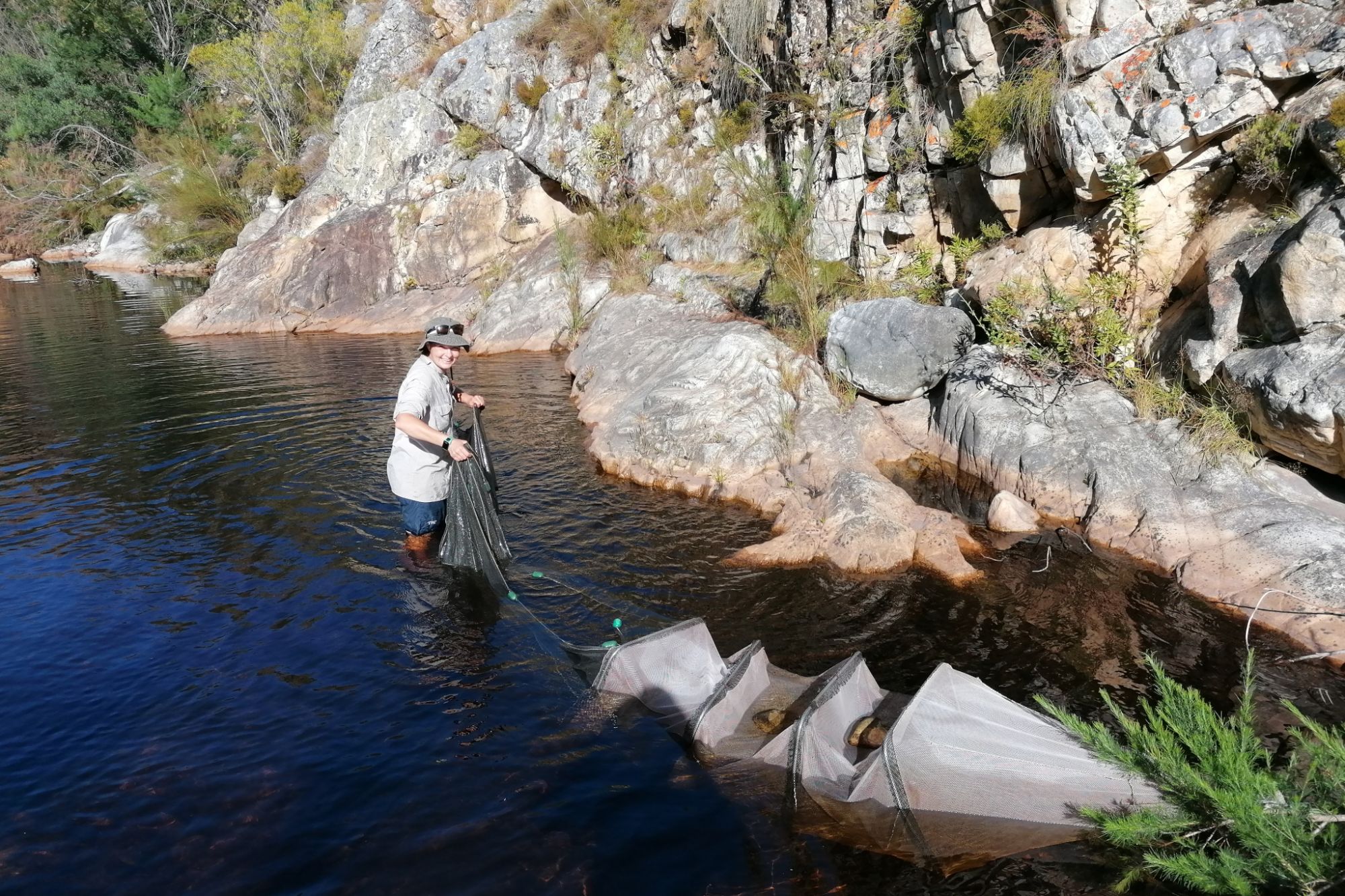
Dr Jordaan retrieving nets while sampling the fish community on a field survey.
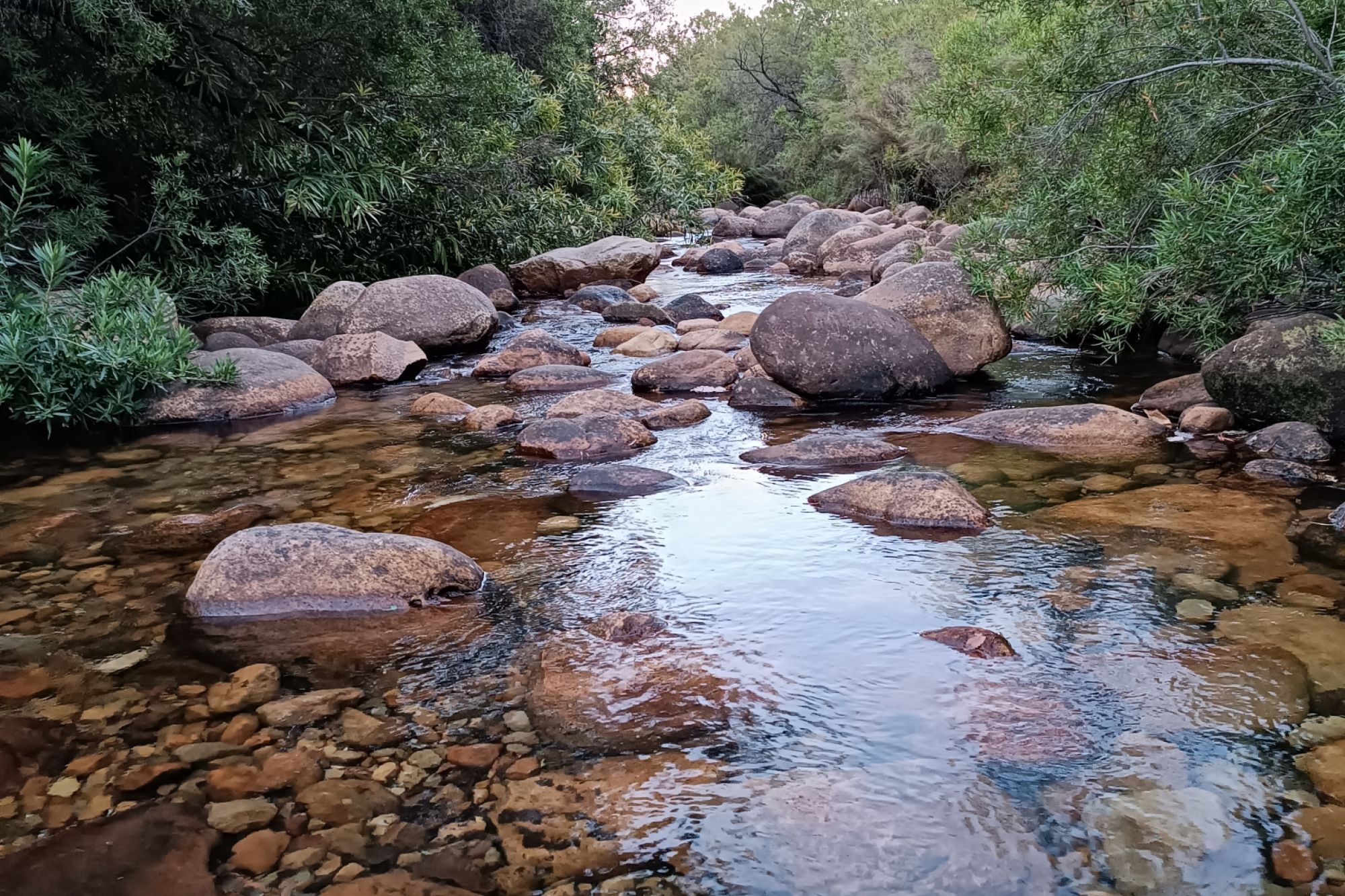
The pristine habitat of the Rondegat river.
Read here for more information on the newly described species of Paradiplozoon.
ABOUT Dr Martine Jordaan
Dr Martine Jordaan is an aquatic biologist with a background in environmental toxicology and conservation science. She has been employed as an ecologist with CapeNature since 2010. Here she has focused on indigenous freshwater fish and aquatic ecosystem conservation within the context of integrated catchment management within the Cape ecoregion. She also has a keen interest in invasion biology and the interactions between invasive species, environmental variables, and pollutants. Dr Jordaan is an honorary research associate at the South African Institute for Aquatic Biodiversity (SAIAB) and the Centre for Invasion Biology (CIB). She has authored and co-authored over 20 peer reviewed papers and book chapters.
ABOUT CapeNature
CapeNature is a public institution mandated to promote and ensure biodiversity conservation within the Western Cape and is the custodian of the Cape Floristic Region. The Entity manages most of the mountain catchments and reserves that supply ecosystem services to the citizens of the Western Cape. This requires good scientific data, a sound understanding of fynbos ecology and commitment to the principles of integrated biodiversity management and planning. Most of this work is in remote areas out of the public eye but has a direct bearing on the quality of life of millions of people in the province.
MEDIA ENQUIRIES:
CapeNature
General Manager: Advocacy
Petro van Rhyn
pvrhyn@capenature.co.za
071 231 7576
Related News

Penguin Palooza 2026 returns to Stony Point in support of African Penguin conservation
Stony Point in Betty’s Bay is one of the last known locations on Earth where African Penguins still breed on the mainland, and the species is under growing pressure. On Saturday, 7 November 2026, Penguin Palooza returns to Stony Point Nature Reserve, giving the public a chance to learn about the species and the work CapeNature, SANCCOB and other partners are doing to protect it.

Robberg Nature Reserve named Best Outdoor Activity in 2026 Readers’ Choice Awards
Robberg Nature Reserve named Best Outdoor Activity in 2026 Readers’ Choice Awards. Robberg Nature Reserve has been named the Best Outdoor Activity in the Best of Knysna & Plett Readers’ Choice Awards 2026. The recognition follows months of nominations and voting by communities across Knysna, Plettenberg Bay and Sedgefield, making the award a meaningful reflection of the place Robberg holds in the local community.

CapeNature maintains clean audit record and expands the Western Cape’s Protected Areas
CapeNature's 2025/26 Annual Report shows the Entity added more than 44 000 hectares to the Western Cape conservation estate over the year. The additions extend protection across mountain catchments that feed the province's water supply, guarding them against the invasive plant growth and wildfire risk that threaten water security. Ultimately the protected areas expansion improves our ability to conserve the rich and unique Western Cape biodiversity.

WESSA recognises 62 Blue Flags and 19 Green Coast sites as South Africa marks 25 years of coastal stewardship
South Africa’s Blue Flag and Green Coast programmes are entering their next chapter with a renewed focus on environmental stewardship, inclusion, community participation and long-term coastal resilience, as WESSA, the Wildlife and Environment Society of South Africa, celebrates 25 years of Blue Flag in South Africa and its own centenary.

CapeNature visitors invited to support communities through new donation scheme
A visit to a CapeNature nature reserve can help a neighbour in need. From 5 October 2026, guests at three participating nature reserves can bring gently used clothing, blankets and other essential items for local non-profit organisations. The first phase of the donation scheme will run at Grootvadersbosch Nature Reserve near Heidelberg, Kogelberg Nature Reserve near Kleinmond, and Cederberg Wilderness Nature Reserve near Clanwilliam.

Radio network upgrade to strengthen emergency communication in Hangklip area
CapeNature and Overstrand Municipality will install a small radio repeater station near Hangklip Peak as part of an upgrade to the region’s radio communication network. The repeater will strengthen the communication networks used by both parties and improve coverage across the Overstrand municipal area, Kogelberg Nature Reserve, Betty’s Bay Marine Protected Area and parts of the City of Cape Town. Reliable radio communication is essential for the daily operations of