
Exploring the hidden world of fynbos frogs
A recent grant from the Herpetological Association of Africa enabled the investigation of the taxonomically confusing species of Ghost Frogs.
Ghost Frogs (Family Heleophrynidae) are an endemic family of frogs that diverged from all other frogs 100 million years ago. These specialised frogs typically inhabit fast-flowing headwater habitats, with both adults and tadpoles having special adaptations for these extreme flow environments, where the rushing water would wash most frogs and tadpoles downstream. The adults have flattened bodies enabling them to fit into rock crevices, long limbs with expanded toe tips for gripping slippery surfaces and cryptic dorsal colouration for camouflage. The tadpoles are streamlined with a large, sucker-like oral disc, allowing them to cling to surfaces in fast-flowing water and even climb wet, vertical rocks.
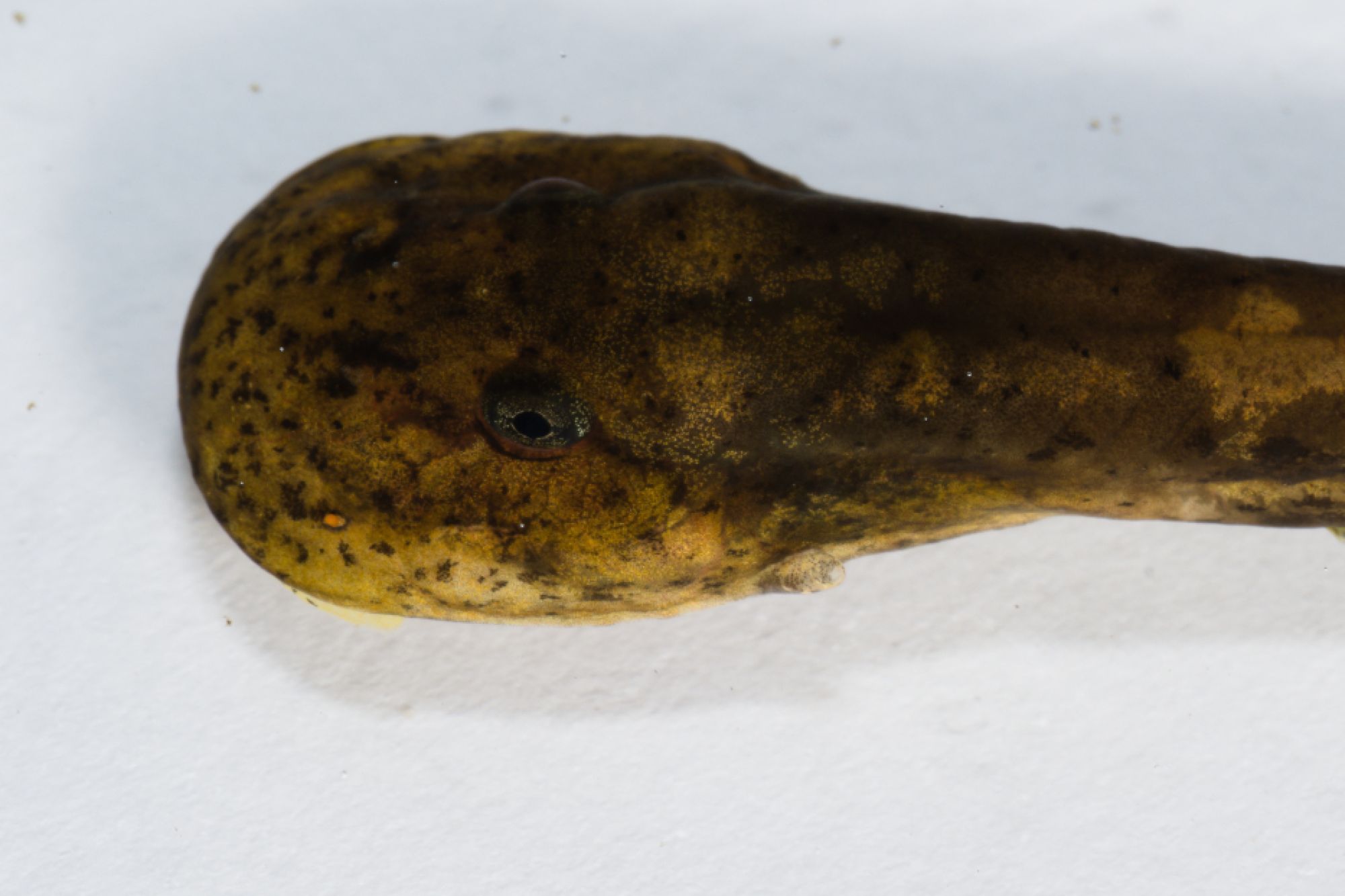
Heleophryne sp. tadpole
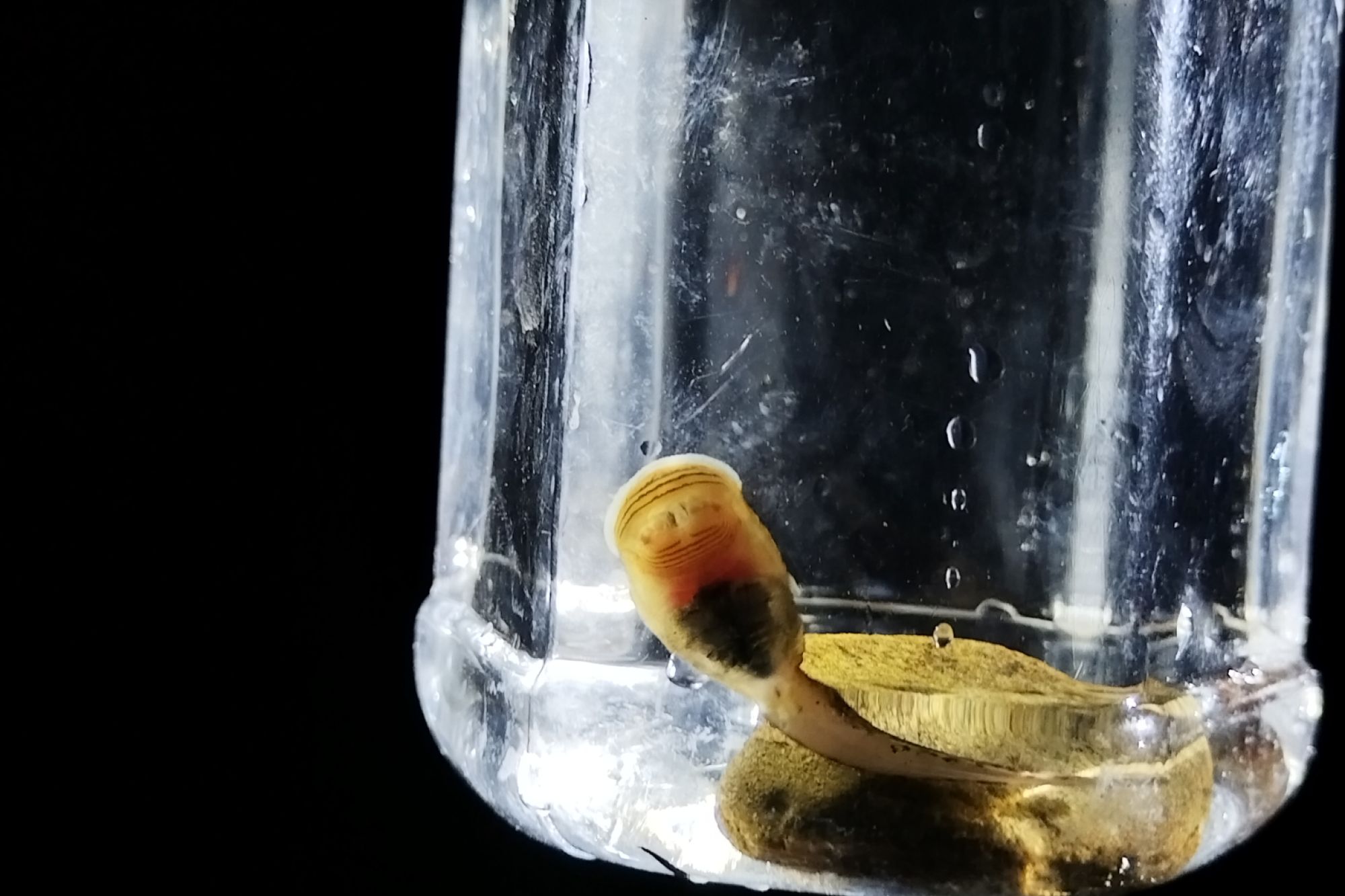
Tadpole
Six known species occur in the Cape Ecoregion, of which four are endemic to the Western Cape. Heleophrynidae is currently the most threatened family of frogs in southern Africa, with nearly a third of all species threatened. The Table Mountain Ghost frog is listed as Critically Endangered. Taxonomically, some species in the genus are problematic, and the status of populations in the Outeniqua, Kammanassie, Kouga, and Baviaanskloof mountains remains uncertain, as does the exact relationship between the family Heleophrynidae and all other frogs.
To answer these evolutionary and conservation-relevant questions, DNA was collected at representative localities across the distribution range of the genus in the Western Cape. These samples, along with existing DNA from earlier collections, will be used for whole-genome sequencing. This data will be used to fully reveal and resolve the differences and similarities across the genus, to work out where the species boundaries exist, which is essential for conservation assessments and, in turn, informs conservation priorities and actions.
Related News

Penguin Palooza 2026 returns to Stony Point in support of African Penguin conservation
Stony Point in Betty’s Bay is one of the last known locations on Earth where African Penguins still breed on the mainland, and the species is under growing pressure. On Saturday, 7 November 2026, Penguin Palooza returns to Stony Point Nature Reserve, giving the public a chance to learn about the species and the work CapeNature, SANCCOB and other partners are doing to protect it.

Robberg Nature Reserve named Best Outdoor Activity in 2026 Readers’ Choice Awards
Robberg Nature Reserve named Best Outdoor Activity in 2026 Readers’ Choice Awards. Robberg Nature Reserve has been named the Best Outdoor Activity in the Best of Knysna & Plett Readers’ Choice Awards 2026. The recognition follows months of nominations and voting by communities across Knysna, Plettenberg Bay and Sedgefield, making the award a meaningful reflection of the place Robberg holds in the local community.

CapeNature maintains clean audit record and expands the Western Cape’s Protected Areas
CapeNature's 2025/26 Annual Report shows the Entity added more than 44 000 hectares to the Western Cape conservation estate over the year. The additions extend protection across mountain catchments that feed the province's water supply, guarding them against the invasive plant growth and wildfire risk that threaten water security. Ultimately the protected areas expansion improves our ability to conserve the rich and unique Western Cape biodiversity.

WESSA recognises 62 Blue Flags and 19 Green Coast sites as South Africa marks 25 years of coastal stewardship
South Africa’s Blue Flag and Green Coast programmes are entering their next chapter with a renewed focus on environmental stewardship, inclusion, community participation and long-term coastal resilience, as WESSA, the Wildlife and Environment Society of South Africa, celebrates 25 years of Blue Flag in South Africa and its own centenary.

CapeNature visitors invited to support communities through new donation scheme
A visit to a CapeNature nature reserve can help a neighbour in need. From 5 October 2026, guests at three participating nature reserves can bring gently used clothing, blankets and other essential items for local non-profit organisations. The first phase of the donation scheme will run at Grootvadersbosch Nature Reserve near Heidelberg, Kogelberg Nature Reserve near Kleinmond, and Cederberg Wilderness Nature Reserve near Clanwilliam.

Radio network upgrade to strengthen emergency communication in Hangklip area
CapeNature and Overstrand Municipality will install a small radio repeater station near Hangklip Peak as part of an upgrade to the region’s radio communication network. The repeater will strengthen the communication networks used by both parties and improve coverage across the Overstrand municipal area, Kogelberg Nature Reserve, Betty’s Bay Marine Protected Area and parts of the City of Cape Town. Reliable radio communication is essential for the daily operations of