
Western Cape to benefit from CapeNature’s 2026 Greening Initiative
CapeNature will continue its Greening Initiatives in 2026, building on the success of previous programmes that supported schools and communities in establishing indigenous gardens and non-invasive food gardens across the Western Cape.
The initiative forms part of CapeNature’s Plant One Million Trees campaign, which contributes to the National Government’s Plant 10 Million Trees initiative aimed at increasing tree planting and promoting environmental sustainability throughout South Africa.
Through the Greening Initiatives, CapeNature partners with schools and community groups to create and maintain green spaces that promote biodiversity, environmental awareness, and sustainable living. These spaces not only enhance local environments but also serve as outdoor learning areas where learners and community members can gain practical knowledge about biodiversity conservation, climate change, and sustainable practices.
As part of the 2026 programme, CapeNature will launch a fun and engaging greening competition for schools and communities across the Province. The competition will encourage participants to develop or improve their gardens by planting indigenous plants, maintaining green spaces and promoting environmental stewardship. Participants will have the opportunity to showcase their creativity and commitment to sustainability while competing for recognition and support from CapeNature. The initiative aims to inspire learners and community members to actively participate in protecting the environment.
The competition will launch on 13 April 2026 to coincide with International Plant Appreciation Day and will run until 15 May 2026.
Greening initiatives are particularly important in the Western Cape due to the region’s unique biodiversity and environmental challenges. Creating green spaces helps improve air quality, reduce heat in urban areas, and provides habitats for birds, insects and other wildlife.
CapeNature encourages residents of the Western Cape to plant indigenous plants and trees during the winter months, when rainfall is more frequent, and water is usually more readily available. Planting during this period generally increases the chances of successful growth and establishment with natural rainfall supporting healthy root development. Local nurseries are always ready to assist with knowledge on what plants are suited to the many niche habitats across the Province.
Indigenous plants are well-suited to the local climate and soil conditions, requiring less water and maintenance while providing important habitats and food sources for local wildlife. By planting indigenous species, communities can help protect the Western Cape’s unique biodiversity.
As part of the 2026 Greening Initiative, CapeNature will work with selected schools and communities across the Province. Participating groups will receive support in the form of seedlings, indigenous plants, gardening tools, and environmental education programmes to help establish and maintain sustainable gardens.
Through collaboration with schools, communities and environmental partners, CapeNature continues to play a role in restoring ecosystems and building a greener, more resilient Western Cape.
For more information about greening initiative competition contact sjavu@capenuture.co.za and view the competition Terms & Conditions here.
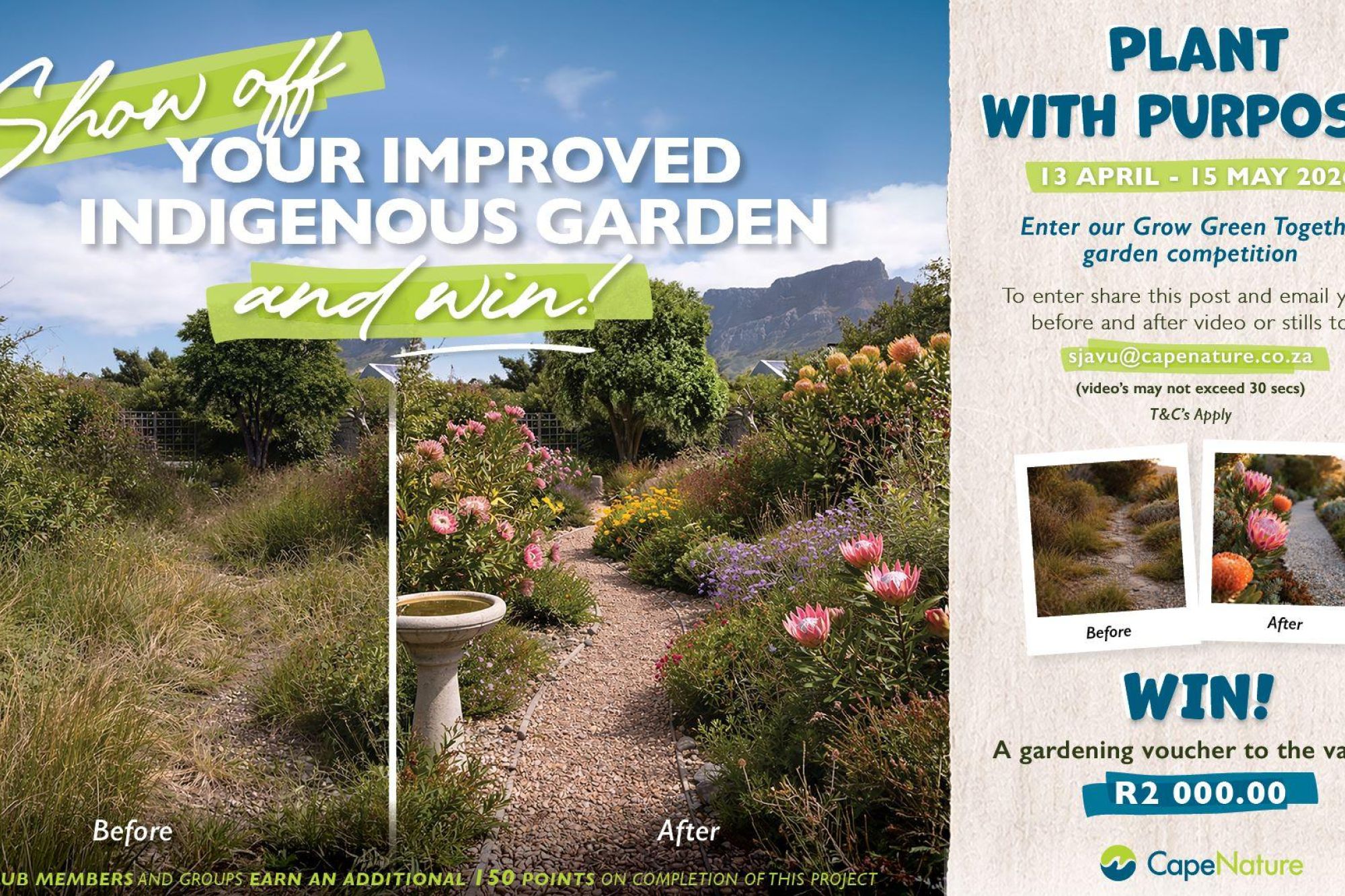
Greening Initiative: Online Gardening Competition
Related News

Penguin Palooza 2026 returns to Stony Point in support of African Penguin conservation
Stony Point in Betty’s Bay is one of the last known locations on Earth where African Penguins still breed on the mainland, and the species is under growing pressure. On Saturday, 7 November 2026, Penguin Palooza returns to Stony Point Nature Reserve, giving the public a chance to learn about the species and the work CapeNature, SANCCOB and other partners are doing to protect it.

Robberg Nature Reserve named Best Outdoor Activity in 2026 Readers’ Choice Awards
Robberg Nature Reserve named Best Outdoor Activity in 2026 Readers’ Choice Awards. Robberg Nature Reserve has been named the Best Outdoor Activity in the Best of Knysna & Plett Readers’ Choice Awards 2026. The recognition follows months of nominations and voting by communities across Knysna, Plettenberg Bay and Sedgefield, making the award a meaningful reflection of the place Robberg holds in the local community.

CapeNature maintains clean audit record and expands the Western Cape’s Protected Areas
CapeNature's 2025/26 Annual Report shows the Entity added more than 44 000 hectares to the Western Cape conservation estate over the year. The additions extend protection across mountain catchments that feed the province's water supply, guarding them against the invasive plant growth and wildfire risk that threaten water security. Ultimately the protected areas expansion improves our ability to conserve the rich and unique Western Cape biodiversity.

WESSA recognises 62 Blue Flags and 19 Green Coast sites as South Africa marks 25 years of coastal stewardship
South Africa’s Blue Flag and Green Coast programmes are entering their next chapter with a renewed focus on environmental stewardship, inclusion, community participation and long-term coastal resilience, as WESSA, the Wildlife and Environment Society of South Africa, celebrates 25 years of Blue Flag in South Africa and its own centenary.

CapeNature visitors invited to support communities through new donation scheme
A visit to a CapeNature nature reserve can help a neighbour in need. From 5 October 2026, guests at three participating nature reserves can bring gently used clothing, blankets and other essential items for local non-profit organisations. The first phase of the donation scheme will run at Grootvadersbosch Nature Reserve near Heidelberg, Kogelberg Nature Reserve near Kleinmond, and Cederberg Wilderness Nature Reserve near Clanwilliam.

Radio network upgrade to strengthen emergency communication in Hangklip area
CapeNature and Overstrand Municipality will install a small radio repeater station near Hangklip Peak as part of an upgrade to the region’s radio communication network. The repeater will strengthen the communication networks used by both parties and improve coverage across the Overstrand municipal area, Kogelberg Nature Reserve, Betty’s Bay Marine Protected Area and parts of the City of Cape Town. Reliable radio communication is essential for the daily operations of